A deep dive into every aspect of Funding Pips drawdown rules, calculations, and practical applications for traders.
What Are Drawdown Rules in Prop Trading?
Drawdown rules are risk management parameters set by proprietary trading firms to protect their capital. In the context of Funding Pips, drawdown refers to the decline in your account equity from a reference point. These rules are designed to ensure that traders demonstrate disciplined risk management — a core skill that any professional trading firm expects from its funded traders.
When you engage with prop firms passing services, understanding drawdown rules becomes the foundation of your trading strategy. These rules dictate how much you can lose before your account is terminated, and they apply differently depending on the phase of your evaluation.
Daily Drawdown Rule (5%)
The daily drawdown rule is one of the most critical components of Funding Pips evaluation criteria. Funding Pips enforces a 5% daily drawdown limit, meaning that your account equity cannot fall more than 5% from the equity level at the start of each trading day. This is calculated based on your account balance at midnight (server time), giving you a fresh drawdown buffer every new trading session.
For example, if you start a trading day with a $100,000 account, your maximum allowable loss for that day is $5,000. If your equity drops to $94,999 at any point during the day, your account will be terminated for violating the daily drawdown rule. It’s important to note that the daily drawdown is calculated based on equity, not just closed trades — meaning floating losses count toward your daily drawdown limit.
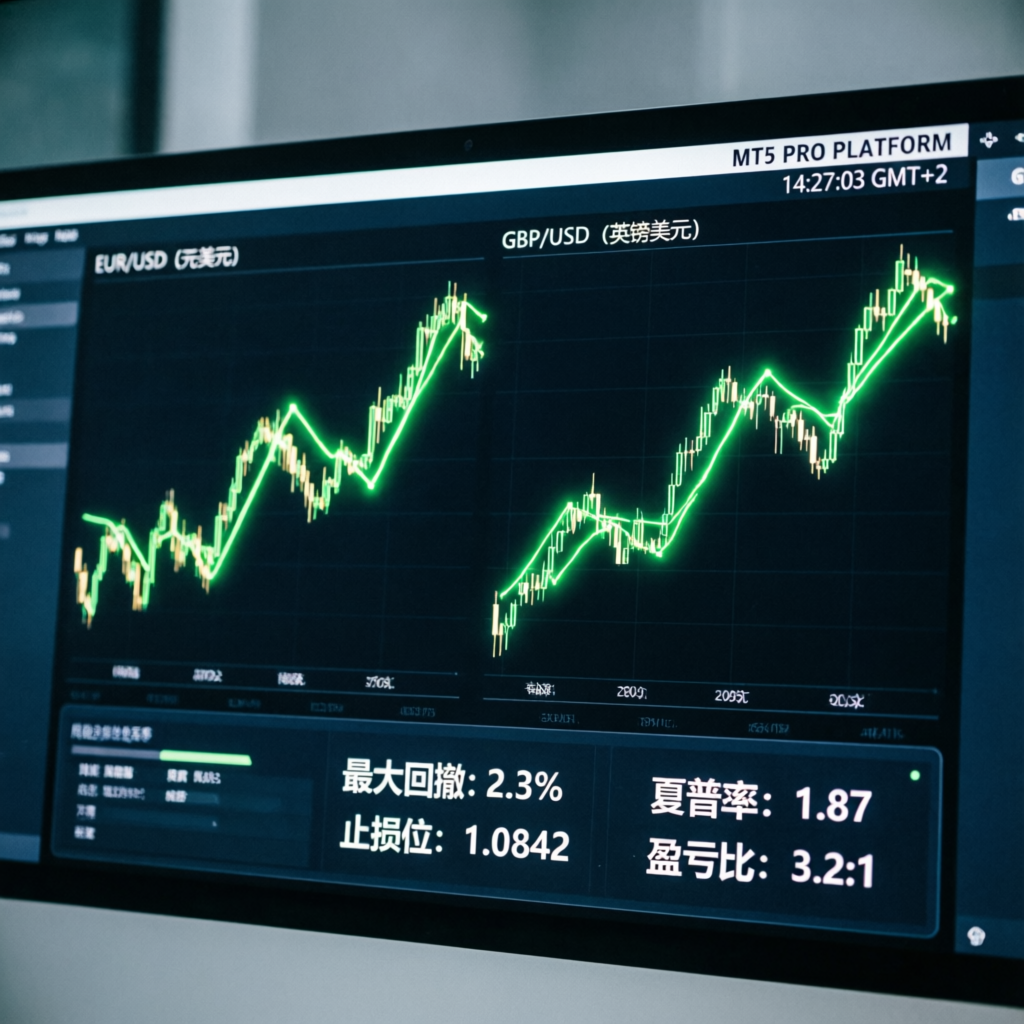
Real-time chart analysis showing daily drawdown monitoring on MT5 platform
Maximum Drawdown Rule (10%)
The maximum drawdown rule represents the total allowable loss from your starting account balance. Funding Pips sets this at 10%, which means your account equity must never fall below 90% of your initial starting balance. Unlike the daily drawdown, the maximum drawdown does not reset — it’s a cumulative limit that applies throughout your entire evaluation period.
This rule is particularly important for traders who use funded account management services, as the account managers must track the drawdown from the starting balance meticulously. A common mistake among traders is focusing only on the daily drawdown while ignoring the maximum drawdown, leading to unexpected account terminations.
📐 Drawdown Calculation Example
Starting Balance: $100,000
Maximum Drawdown (10%): Your equity must never fall below $90,000
Daily Drawdown (5%): Each day, you can lose a maximum of 5% from the previous day’s closing equity
Strategy: Even if you lose 3% on Monday, you still have a full 5% daily buffer on Tuesday — but your maximum drawdown has only recovered 2% of its total buffer.
How Funding Pips Calculates Drawdown
Understanding how Funding Pips calculates drawdown is essential for managing your trading risk effectively. The firm uses a trailing mechanism for both daily and maximum drawdown calculations. Here’s how it works in practice:
- Equity-Based Calculation: Drawdown is calculated based on your account equity (balance + floating P/L), not just your closed trade balance
- Server Time Reset: The daily drawdown resets at the Funding Pips server time, typically at midnight UTC
- Peak Equity Tracking: The maximum drawdown tracks from your starting balance, meaning any gains increase the distance from your drawdown limit
- Real-Time Monitoring: Drawdown levels are monitored in real-time, so floating losses are included in the calculation
- No Partial Violations: Even briefly touching the drawdown limit will trigger an account violation
Professional traders who use prop firm services from PFM Capitals understand that drawdown management is not just about knowing the rules — it’s about building a trading system that operates comfortably within them. This means sizing positions appropriately, using stop losses consistently, and avoiding overleveraged trades that could trigger a drawdown violation.
The Relationship Between Profit Targets and Drawdown
One of the most important aspects of Funding Pips evaluation is understanding how profit targets interact with drawdown rules. In Phase 1, you need to achieve an 8% profit target while staying within the drawdown limits. In Phase 2, the profit target reduces to 5%. This creates an interesting dynamic where you must be aggressive enough to reach the profit target but conservative enough to avoid drawdown violations.
The key is to find the right balance. Our funded account management team at PFM Capitals recommends targeting 1-2% per trade with a maximum of 2-3 concurrent positions. This approach allows you to reach the profit target steadily while keeping a safe distance from drawdown limits.
Pro Tip: Many traders fail because they try to rush the profit target. A steady approach of 1-2% per trade, with strict stop losses, will consistently outperform aggressive trading in the long run. The market will always be there — protect your capital first.
Common Drawdown Violation Scenarios
Based on our extensive experience providing prop firms passing services, we’ve identified the most common scenarios that lead to drawdown violations on Funding Pips:
- News Event Overexposure: Trading high-impact news events without reducing position size can cause rapid equity swings that breach drawdown limits
- Averaging Down: Adding to losing positions in hopes of a reversal can quickly compound losses beyond the daily drawdown limit
- Weekend Gaps: Holding positions over the weekend can result in gap openings on Monday that exceed drawdown limits
- Correlated Positions: Opening multiple positions on correlated pairs effectively doubles your risk exposure without you realizing it
- Ignoring Floating Losses: Forgetting that floating losses count toward drawdown can lead to unexpected violations
- Overtrading: Taking too many trades in a single session increases the probability of cumulative losses hitting drawdown limits
At PFM Capitals, we’ve developed proprietary risk management protocols specifically designed to avoid these common pitfalls. Our forex account management team ensures that every trade is sized, monitored, and managed with drawdown protection as the top priority.