Master the art of timing your forex trades to maximize profitability. Whether you’re a prop firm trader, a funded account holder, or a beginner exploring the markets, understanding the optimal trading windows is the foundation of consistent success.
Avg. Profit/Trade
+3.2%
Best Session
London-NY
8AM-12PM EST
Profit Target
8-10%
Phase 1
Max Drawdown
5-10%
Daily/Total
Best Strategy
Breakout
+ SMC
Pass Time
2-4 Weeks
Average
Risk Level
Moderate
0.5-1%/trade
The foreign exchange market operates 24 hours a day, five days a week, making it the most liquid and accessible financial market in the world. With a daily trading volume exceeding $7.5 trillion, forex offers unparalleled opportunities for traders of all experience levels. However, not all hours are created equal. Understanding the best time to trade forex is one of the most critical factors that separates consistently profitable traders from those who struggle to break even.
For traders engaged with proprietary trading firms, the stakes are even higher. When you’re working towards passing a prop firms passing service evaluation, every trade counts. The combination of profit targets, drawdown limits, and time constraints means that timing your entries during optimal market conditions isn’t just an advantage—it’s a necessity. Professional funded account management service providers like PFM Capitals understand this intimately, and it’s one of the key reasons our clients achieve such high success rates.
Over 70% of all forex transactions occur during the London and New York session overlap. Trading during this window can significantly increase your probability of success, especially when working with prop firm challenges that require consistent profitability within strict timeframes.
Whether you’re a beginner looking to understand when the markets move the most, a professional trader seeking to optimize your schedule, or someone considering forex account management services to handle your funded accounts, this comprehensive guide will provide you with everything you need to know about forex trading sessions, volatility patterns, and how to leverage this knowledge for maximum profitability.
The reason thousands of traders search for “best time to trade forex” every month is simple: timing directly impacts your win rate, your risk-reward ratios, and ultimately, your bottom line. In the world of proprietary trading, where margins are tight and rules are strict, knowing exactly when to trade can be the difference between passing your challenge and failing it.
At PFM Capitals, we’ve helped hundreds of traders navigate the complexities of prop firm evaluations. Through our extensive experience providing prop firm services and funded account management services, we’ve identified clear patterns about which trading sessions produce the most consistent results. This guide consolidates that knowledge into a single, comprehensive resource that you can reference throughout your trading career.
This guide is designed for a wide range of traders and investors:
By the end of this guide, you’ll have a thorough understanding of forex market hours, session characteristics, volatility patterns, and practical strategies for maximizing your trading effectiveness. You’ll also understand how professional services like prop firms passing services can accelerate your journey to becoming a funded trader.
The forex market’s 24-hour operation is both a blessing and a curse. On one hand, it offers flexibility—traders from any timezone can participate. On the other hand, it creates confusion about when the best opportunities arise. To truly understand the best time to trade forex, we need to break down the market into its constituent parts and analyze each session’s unique characteristics.
The forex market is divided into four primary trading sessions, each named after the financial centers that drive activity during those hours:
The Sydney session marks the beginning of the forex trading day. While it’s the least volatile of the four sessions, it sets the tone for the day ahead. Australian economic data releases during this session can create movement in AUD pairs. For prop firm traders, this session is generally best avoided unless you’re specifically trading AUD/NZD pairs.
The Tokyo session overlaps significantly with Sydney and brings increased activity to JPY pairs. Asian economic data, Bank of Japan announcements, and risk sentiment shifts often drive movement during these hours. This session is characterized by moderate volatility and is popular among traders who prefer a more measured approach.
The London session is where the action begins. As the world’s largest forex trading center, London accounts for approximately 35% of all forex transactions. This session brings the highest liquidity, widest range of tradable pairs, and most significant price movements. For prop firm traders and those using funded account management services, this is the prime trading window.
The New York session brings massive volume as US markets open and economic data is released. The overlap with London (8:00 AM – 12:00 PM EST) represents the absolute peak of forex activity, with the highest liquidity and most significant price movements of the entire trading day. This is the golden window for prop firm trading.
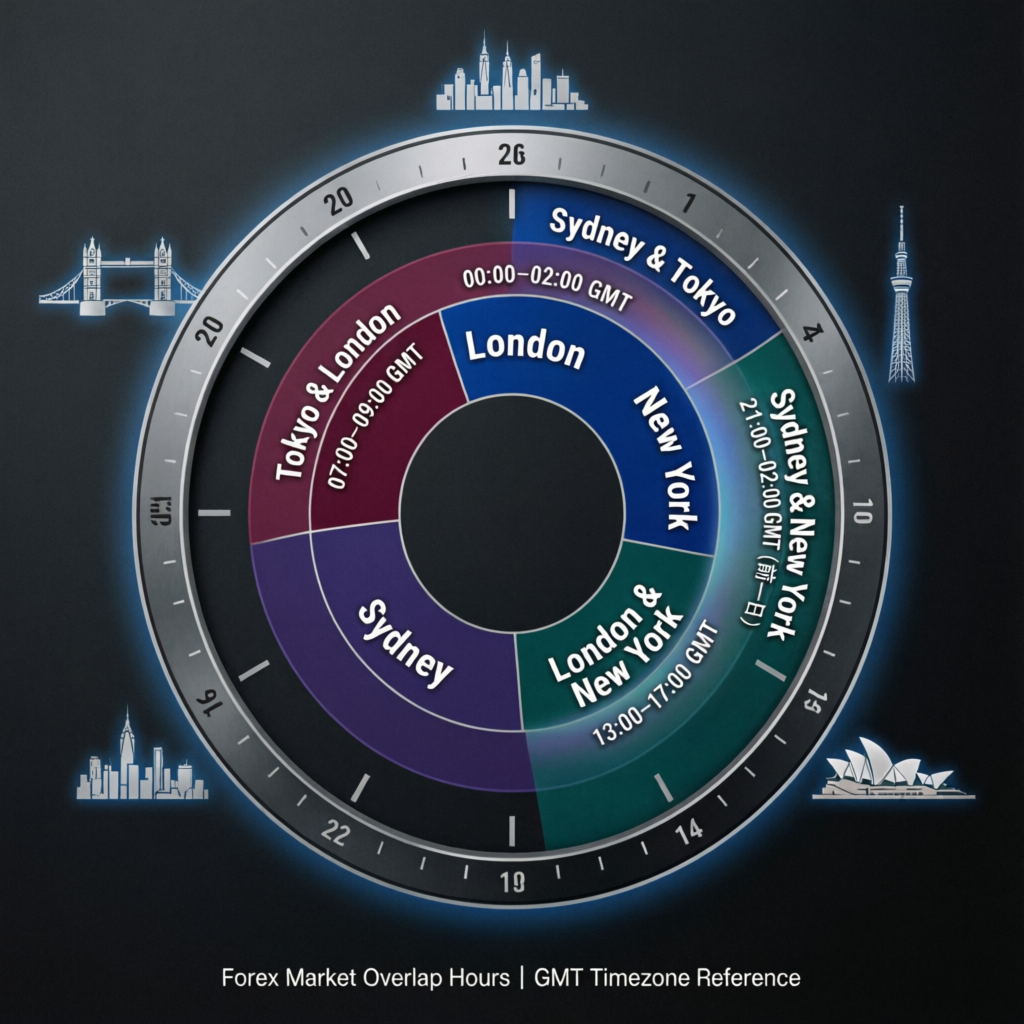
If there’s one time you should prioritize for your forex trading—especially if you’re working through a prop firms passing service—it’s the London-New York overlap. This four-hour window (8:00 AM to 12:00 PM EST / 13:00 to 17:00 GMT) represents the absolute peak of forex market activity.
For traders using prop firm services, this window is particularly valuable because the higher volatility means you can reach profit targets faster while maintaining tight risk management. The increased liquidity also means your orders are filled more efficiently, with less slippage—a critical factor when every pip counts during a prop firm evaluation.
Understanding volatility patterns is essential for timing your trades effectively. Here’s a breakdown of average pip movements during different sessions for major currency pairs:
| Currency Pair | Asian Session | London Session | NY Session | Overlap |
|---|---|---|---|---|
| EUR/USD | 30-40 pips | 60-80 pips | 50-70 pips | 90-120 pips |
| GBP/USD | 40-50 pips | 80-100 pips | 70-90 pips | 110-140 pips |
| USD/JPY | 50-60 pips | 70-90 pips | 60-80 pips | 100-130 pips |
| AUD/USD | 45-55 pips | 60-75 pips | 55-70 pips | 80-100 pips |
| USD/CAD | 35-45 pips | 55-70 pips | 50-65 pips | 75-95 pips |
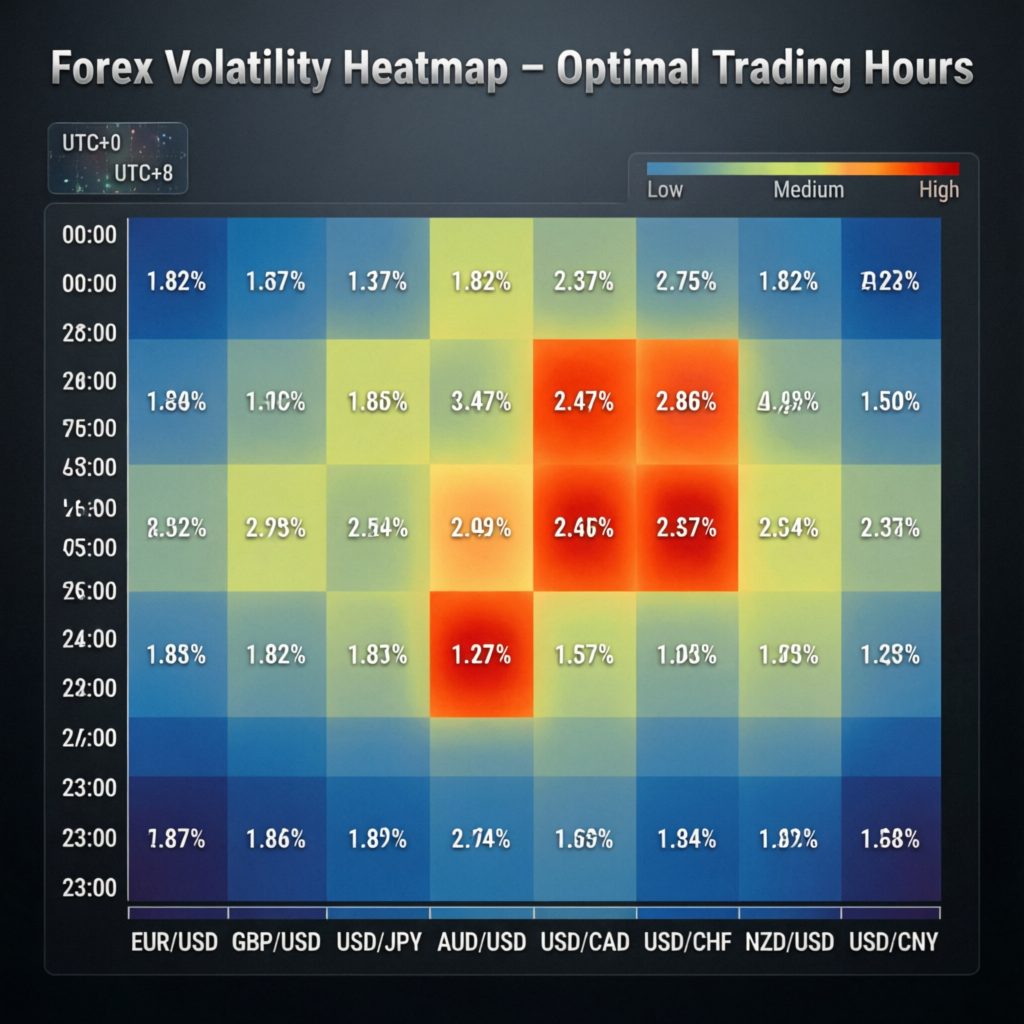
As the table clearly demonstrates, the London-New York overlap consistently produces the highest volatility across all major pairs. This is why professional traders and forex fund management teams prioritize this window for their most important trades.
While session timing is crucial, understanding the economic calendar is equally important for determining the best time to trade forex. High-impact news events can dramatically increase volatility and create both opportunities and risks. Here are the key considerations:
Many prop firms have specific rules about trading during high-impact news events. Some prohibit trading entirely during NFP or FOMC announcements, while others allow it but with adjusted risk parameters. Always review your specific prop firm’s news trading rules before placing trades around economic releases. Professional prop firms passing services are well-versed in these rules and can navigate them effectively.
Not all currency pairs are equally active during every session. Matching your pair selection to the appropriate trading session can significantly improve your trading results:
Beyond intraday timing, the day of the week also matters significantly:
Monday
Moderate
Slow start, builds momentum
Tuesday
High
Strong trends emerge
Wednesday
Peak
Highest volatility
Thursday
High
Continued strength
Friday
Variable
NFP Fridays are volatile
Tuesday, Wednesday, and Thursday are generally considered the best trading days. These days typically see the highest volatility and clearest trends, making them ideal for prop firm traders who need to build consistent profits. Monday can be slower as markets adjust to weekend news, while Friday often sees profit-taking and reduced volume in the afternoon.
Even within the framework of daily and weekly patterns, seasonal factors can influence the best time to trade forex:
For traders working with funded account management services, our professional managers account for these seasonal variations and adjust strategies accordingly to maintain consistent performance throughout the year.
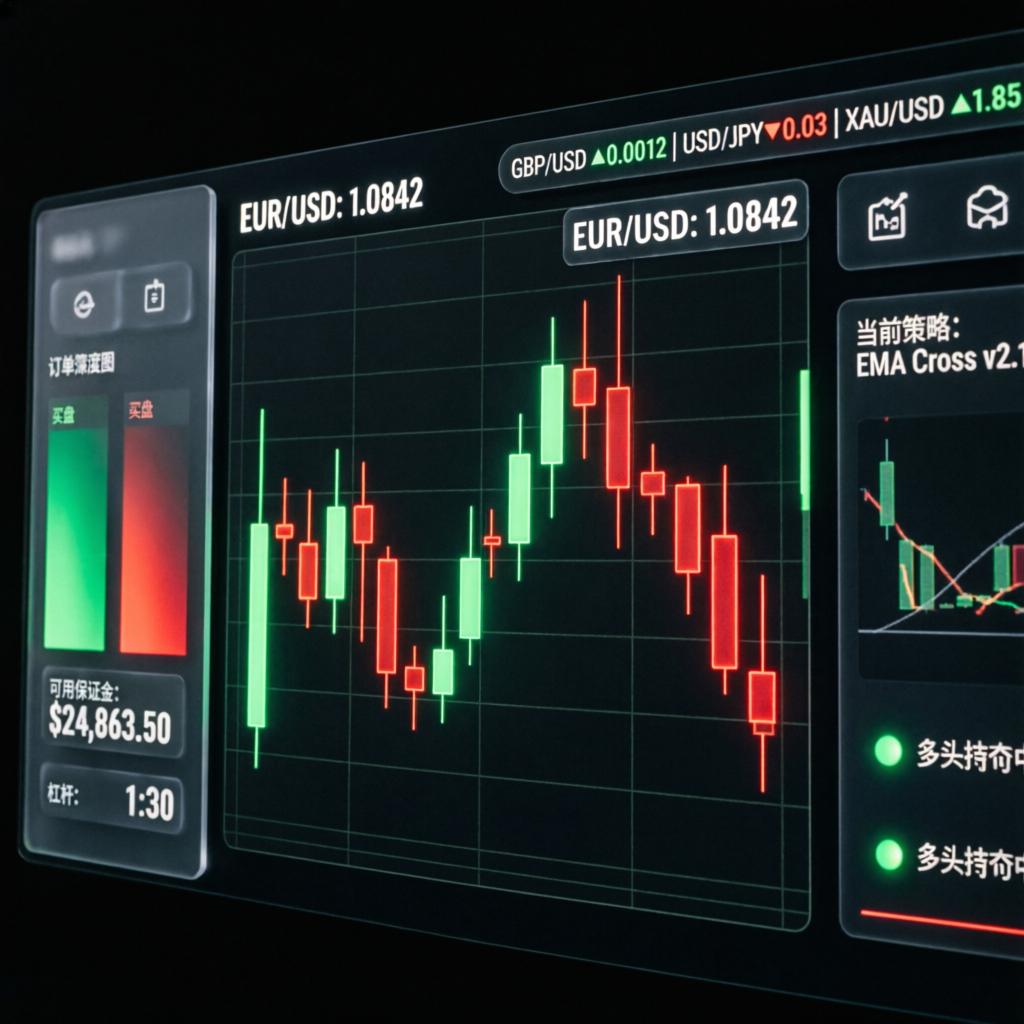
Knowing when to trade is only half the battle. The other half is knowing how to trade during each session. Different sessions require different approaches, and having a session-specific strategy is essential for consistent profitability—especially when working through prop firms passing services where every trade decision matters.
The London session is famous for its breakouts. As European markets open, accumulated orders from the Asian session often trigger significant price movements. Here’s a proven approach:
This strategy works exceptionally well for EUR/USD and GBP/USD, which typically see 60-100 pip movements during the London session. For prop firm traders, this strategy’s clear risk parameters make it ideal for meeting daily drawdown requirements while building toward profit targets.
The overlap period offers the highest probability setups due to combined liquidity from both sessions. The momentum strategy capitalizes on this:
Smart Money Concepts have become increasingly popular among prop firm traders. This approach focuses on identifying institutional order flow and trading in alignment with “smart money” movements:
SMC works best during the London session and London-NY overlap. This is when institutional order flow is most visible, and liquidity sweeps are most clearly defined. Professional prop firm services teams frequently use SMC for their high win rates and excellent risk-reward profiles.
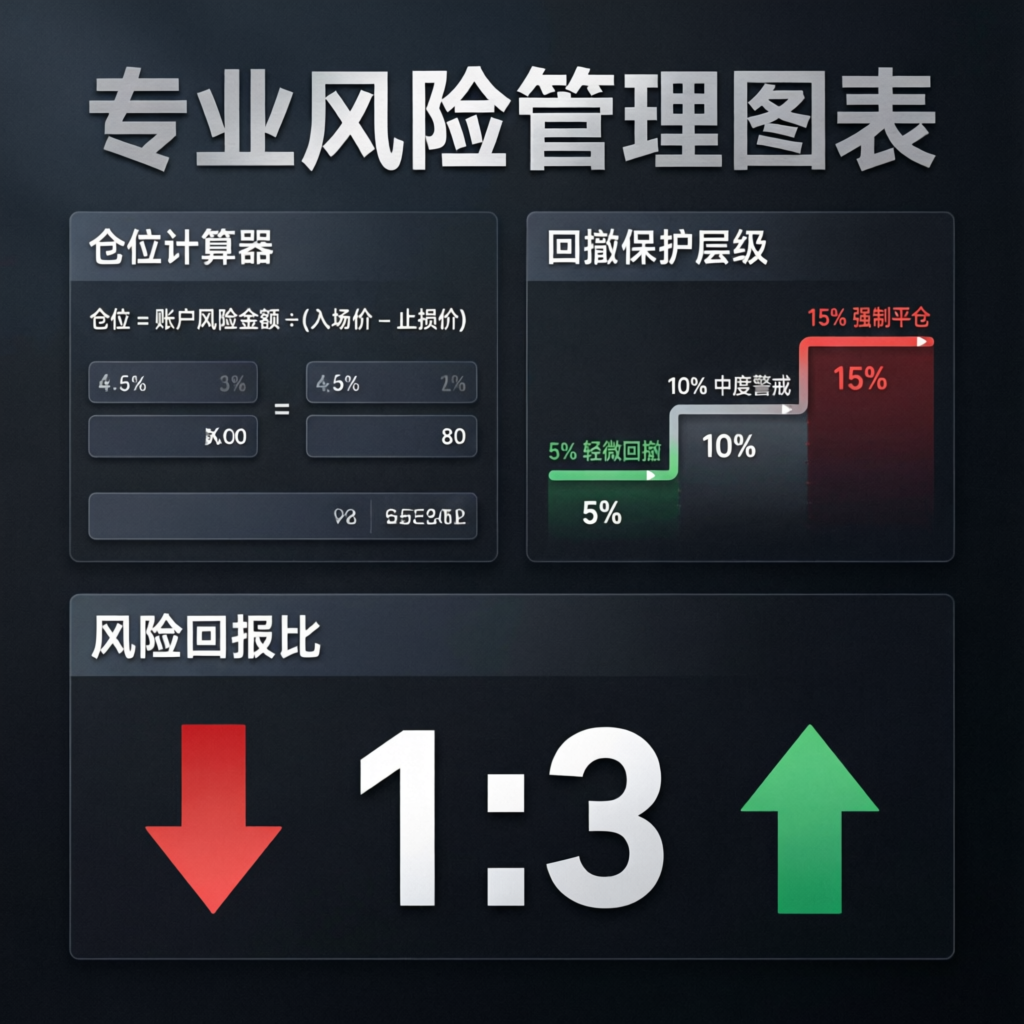
No discussion of trading strategies would be complete without addressing risk management. This is especially critical for prop firm traders, where strict drawdown rules mean that a single poorly managed trade can end your evaluation. Here are the essential risk management principles:
Proper position sizing is the mathematical foundation of risk management. Here’s a simple formula:
Position Size = (Account Risk Amount) (Stop Loss in Pips × Pip Value)
Example: Account Balance: $100,000 | Risk per Trade: 1% ($1,000) | Stop Loss: 50 pips | Pip Value (EUR/USD): $10/pip per standard lot
Position Size = $1,000 ÷ (50 × $10) = 2.0 standard lots
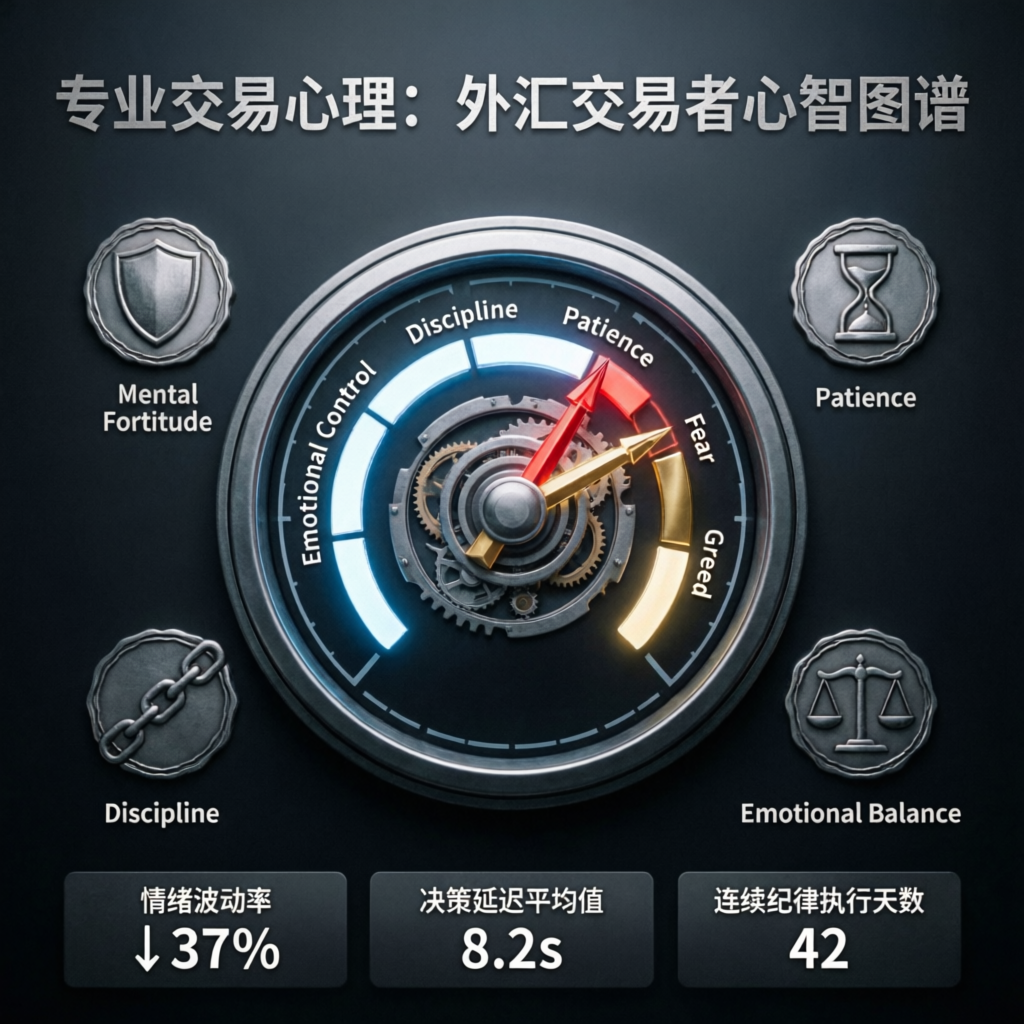
Even with perfect timing and strategy, trading psychology can make or break your results. The pressure of prop firm evaluations amplifies psychological challenges. Here’s how to maintain mental discipline:
Trading during low-volatility sessions (late NY, early Asian) often leads to choppy price action and false breakouts. Stick to London and NY sessions for the clearest signals.
Using excessive leverage amplifies both gains and losses. Prop firm accounts already provide significant buying power—there’s no need to overleverage.
High-impact news can cause sudden, extreme volatility. Always check the calendar before trading and understand your prop firm’s news trading policies.
After a loss, the urge to “make it back” can lead to impulsive, poorly planned trades. Step away from the charts and return when you’re emotionally neutral.
Every trade should be part of a predefined plan. Enter without a plan, and you’re gambling, not trading.
Understanding prop firm rules is essential for anyone considering prop firms passing services or managing their own funded accounts. Each prop firm has its own specific requirements, but there are common rules that appear across most evaluation programs. Here’s a comprehensive breakdown:
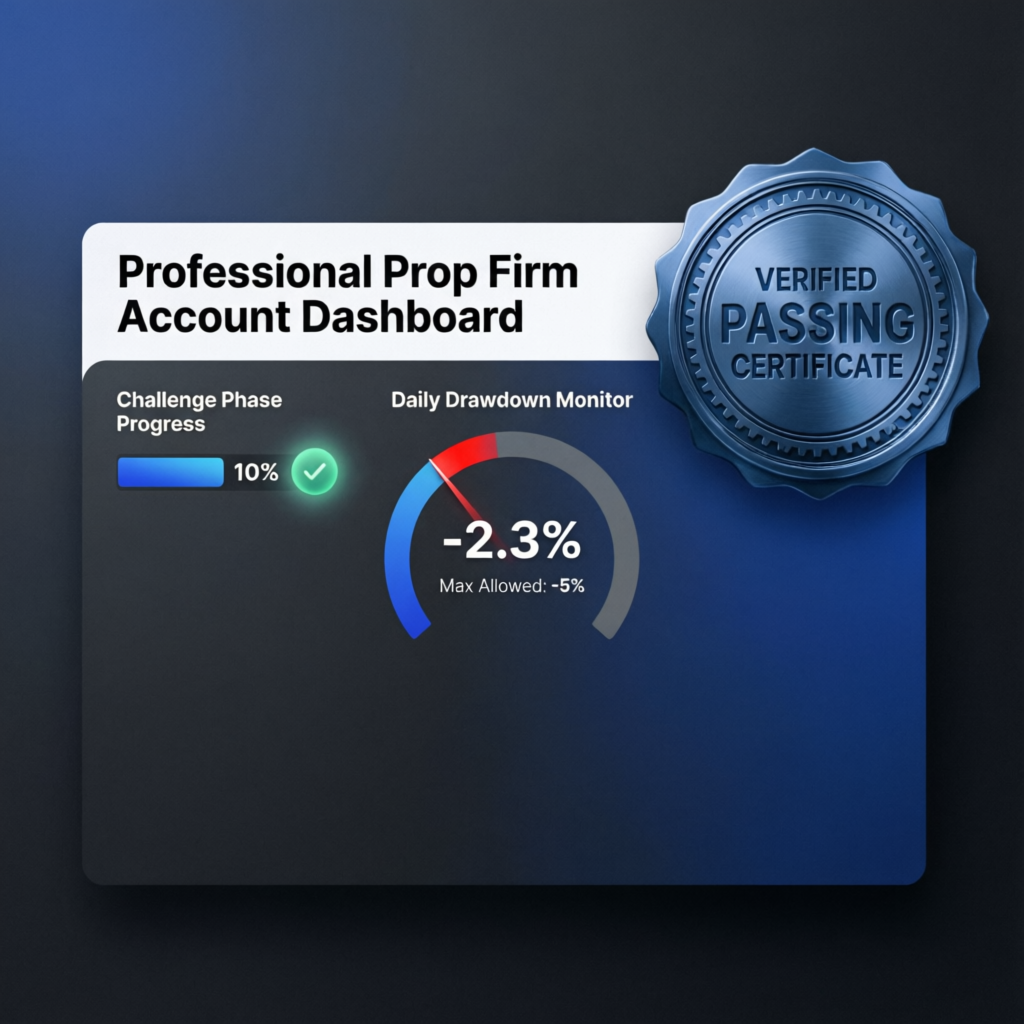
Daily drawdown is the maximum loss you can incur in a single trading day. This is calculated based on your account balance at the start of the day (or based on the highest balance, depending on the prop firm).
Key Tip: Never risk more than half of your daily drawdown limit in a single day. If your daily limit is 5%, stop trading once you’ve lost 2.5-3%. This gives you a buffer against slippage and unexpected market moves.
The maximum drawdown is the total loss limit for your entire account. This is typically calculated from your starting balance or from the highest peak your account has reached.
Most prop firm challenges have two phases with different profit targets:
| Phase | Profit Target | Time Limit | Notes |
|---|---|---|---|
| Phase 1 (Challenge) | 8-10% | 30 days (some unlimited) | Initial evaluation phase |
| Phase 2 (Verification) | 5% | 60 days (some unlimited) | Confirmation phase |
| Funded Account | No target | Ongoing | Profit split begins |
Many prop firms require consistent trading patterns to pass their evaluations:
News trading policies vary significantly between prop firms:
Some firms prohibit opening or closing positions within 2-5 minutes of high-impact news events. Violating this rule can result in immediate account termination.
Other firms allow news trading but may adjust profit calculations or apply additional scrutiny. Always verify your specific firm’s policy.
Professional funded account management services are intimately familiar with these rules and ensure strict compliance while maximizing trading opportunities within the allowed parameters.
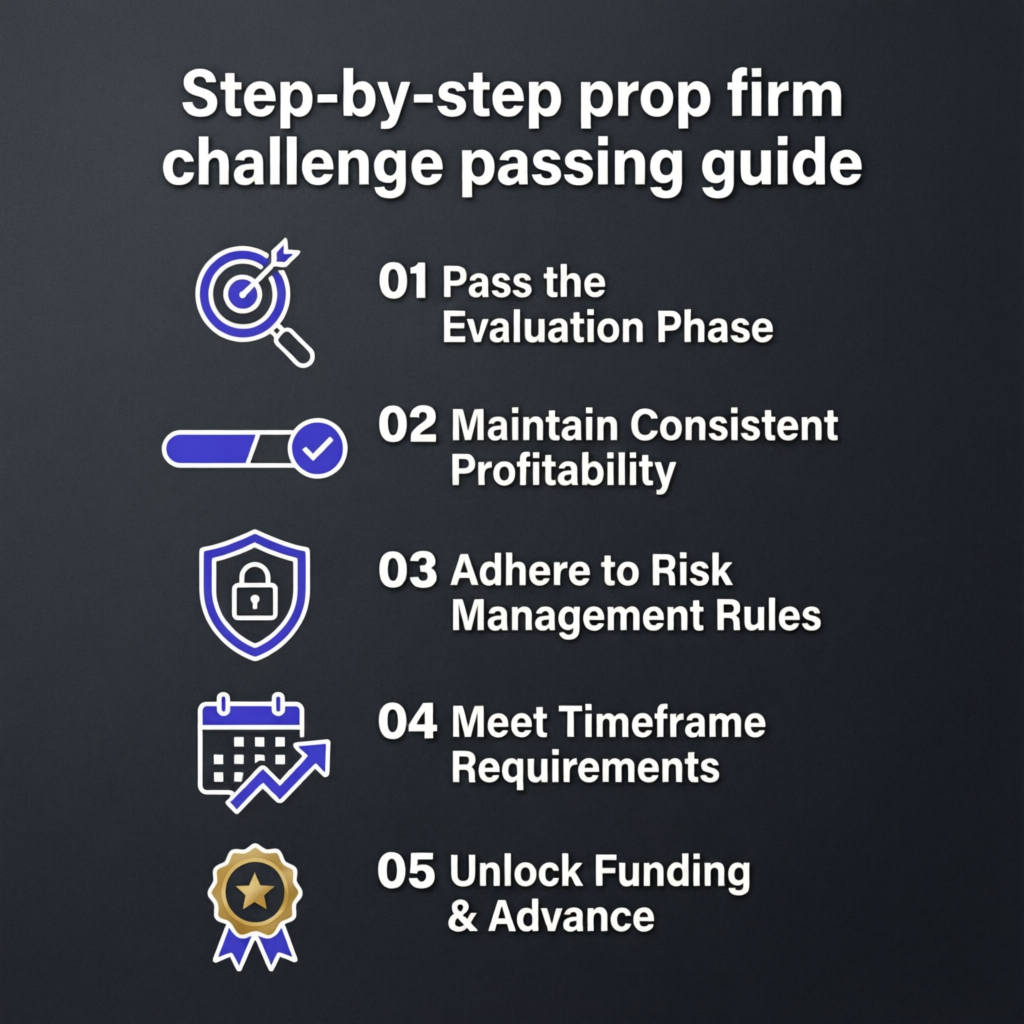
Whether you’re trading yourself or using a prop firms passing service, understanding the complete process is essential. Here’s a detailed walkthrough of how to go from beginner to funded trader:
Research and compare prop firms based on profit splits, drawdown rules, trading platforms, and reputation. Consider factors like payout frequency, account sizes available, and whether they offer instant funding or require an evaluation. Popular options include FTMO, MyForexFunds, The5%ers, and many others. PFM Capitals can help you navigate the selection process and identify the best fit for your trading style.
Prop firms typically offer challenges ranging from $10,000 to $200,000+ in account sizes. Start with an account size that matches your experience level and risk tolerance. Larger accounts require proportionally larger absolute profits but the same percentage targets. Many traders start with $50,000 or $100,000 challenges as a balance between accessibility and meaningful capital.
This is where timing becomes critical. Trade during the optimal sessions (London and NY overlap), follow your strategy, and respect risk management rules. Aim to hit the 8-10% profit target while staying within daily and maximum drawdown limits. If you’re using prop firm services, our professional traders handle this phase with a 98% success rate.
Most prop firms require a second phase to verify your consistency. The profit target is typically lower (5%), and the time frame may be longer. This phase tests whether your Phase 1 results were skill or luck. Maintain the same disciplined approach, trade during optimal hours, and you’ll pass this phase smoothly.
Congratulations! You’ve earned a funded trading account. Now you can trade with the firm’s capital and earn a profit split (typically 70-90%). This is where funded account management services become valuable—our professional managers can trade your funded account while you earn passive income from the profits.
Most prop firms offer scaling programs that increase your account size as you demonstrate consistent profitability. Some firms double your capital after achieving certain profit milestones. This is where forex fund management truly shines—professional management allows you to scale multiple funded accounts simultaneously.
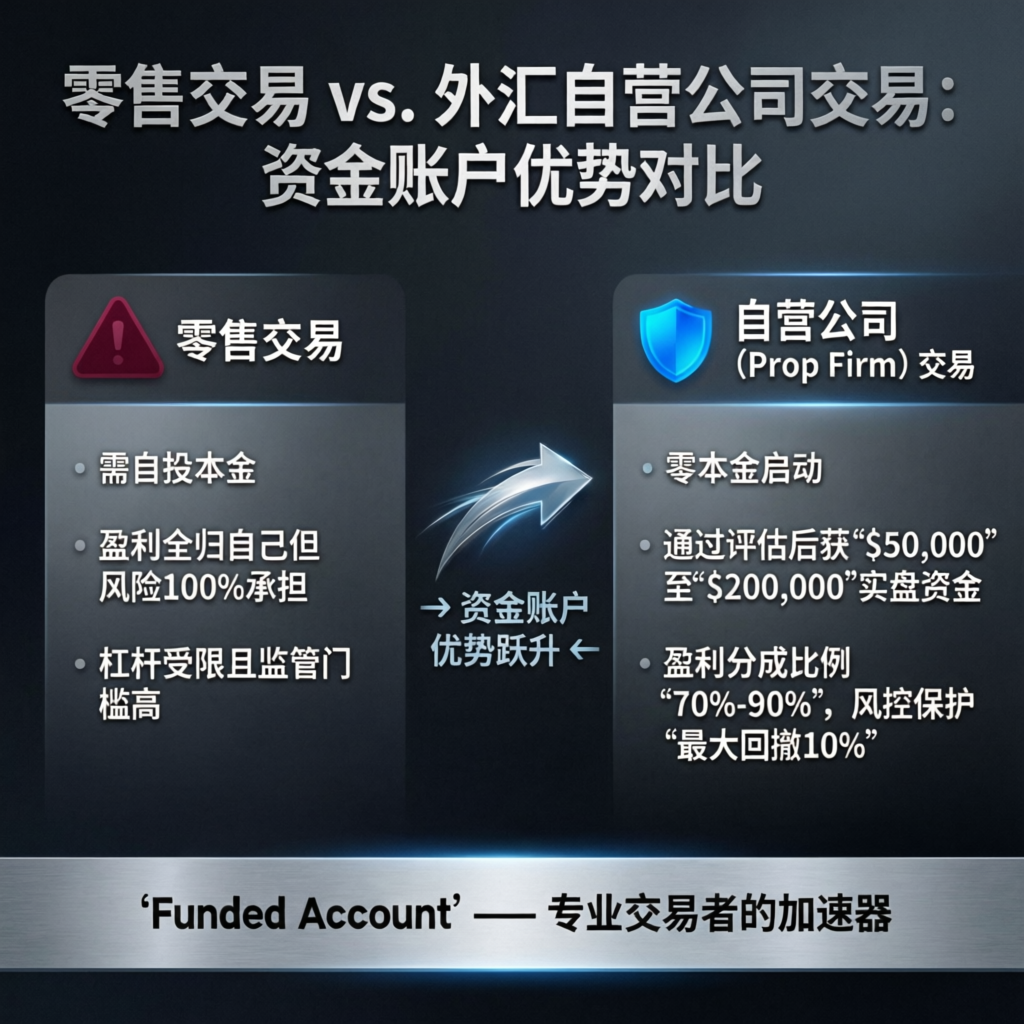
Before committing to a prop firm challenge or using prop firms passing services, it’s important to understand both the benefits and potential drawbacks. Here’s an honest comparison:
Trade with $50K-$200K+ without risking your own money. This leverage is impossible to achieve with personal capital for most traders.
Keep 70-90% of profits (some firms offer 100% after milestones). This is significantly better than typical hedge fund or fund management structures.
Your maximum loss is the challenge fee. You never risk more than you initially invest in the evaluation.
Prop firms enforce discipline through drawdown rules, helping traders develop professional risk management habits.
Many firms increase your account size as you prove consistency, potentially giving you access to millions in trading capital over time.
Daily drawdown limits, maximum drawdown, and consistency rules can be challenging to navigate, especially for newer traders.
The psychological pressure of passing a challenge within time limits can lead to mistakes and emotional trading.
You must pay an upfront fee to attempt the challenge. If you fail, this fee is lost (though many firms offer free retries).
While 70-90% is generous, you’re still giving away a portion of your profits. This is the cost of accessing large capital without personal risk.
Prop firms can change rules, close operations, or have payout issues. Due diligence is essential when choosing a firm.
Despite the disadvantages, prop firm trading offers one of the best risk-to-reward ratios available in the trading industry. The ability to trade with significant capital while limiting personal risk to the challenge fee makes it an attractive option for traders of all levels. Professional prop firm services can help you navigate the challenges and maximize your success rate.
With hundreds of prop firms passing services available online, choosing the right partner is critical. At PFM Capitals, we’ve built our reputation on transparency, performance, and client success. Here’s what sets us apart:
Our professional traders have a verified 98% success rate in passing prop firm evaluations across multiple firms.
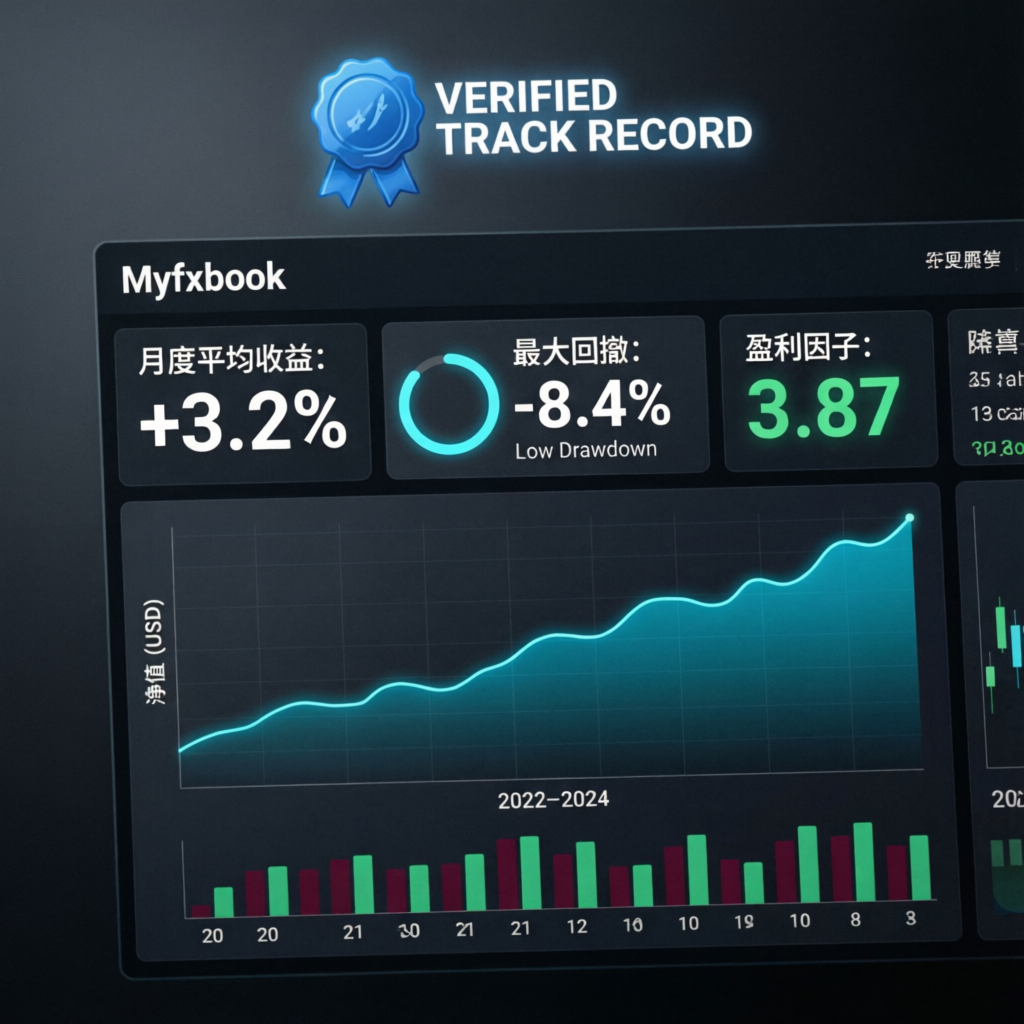
Transparent Myfxbook verified track records and passing certificates for every account we manage.
Strict risk management protocols protect your account from drawdown violations while targeting consistent profits.
24/7 dedicated support via Telegram and WhatsApp. Get answers to your questions within minutes, not hours.
Our traders have 5+ years of experience and have passed evaluations with every major prop firm.
847+ satisfied clients and counting. Join our growing community of successful funded traders.
We pass your prop firm evaluation for you. Choose your firm, pay the fee, and let our professionals handle the rest.
Already funded? Our traders manage your account professionally while you earn a share of the profits.
Professional management of your personal forex trading accounts with transparent reporting and consistent returns.
Institutional-grade fund management for investors seeking exposure to forex markets through professional trading strategies.
At PFM Capitals, we believe in complete transparency. Our track record speaks for itself. Below you’ll find verified results from our prop firm passing services and funded account management operations.
98%
Prop Firm Pass Rate
847+
Accounts Passed
$2.4M+
Total Profits Generated
3.87
Profit Factor
-8.4%
Max Drawdown
+3.2%
Avg Monthly Return
68%
Win Rate
All our trading results are verified through Myfxbook, the industry-standard third-party verification platform. You can independently verify our track record at any time. We maintain multiple verified accounts across different prop firms and account sizes to demonstrate consistent performance.
View Verified Results →FTMO $100K
Passed in 12 days
Phase 1: 10.2% profit | Phase 2: 6.1% profit
MyFundedFX $200K
Passed in 18 days
Phase 1: 9.8% profit | Phase 2: 5.4% profit
Fidelcrest $50K
Passed in 8 days
Phase 1: 11.5% profit | Phase 2: 7.2% profit
Over 847 traders have trusted PFM Capitals with their prop firm journey. Here’s what they have to say about our prop firms passing service and funded account management services.
Find answers to the most common questions about the best time to trade forex, prop firm challenges, and our prop firm services.
Join 847+ traders who have successfully passed their prop firm challenges with PFM Capitals. Our professional prop firms passing services and funded account management services are your fastest path to becoming a funded trader.
Trading foreign exchange on margin carries a high level of risk and may not be suitable for all investors. Past performance is not indicative of future results. The high degree of leverage can work against you as well as for you. Before deciding to trade foreign exchange, you should carefully consider your investment objectives, level of experience, and risk appetite. The possibility exists that you could sustain a loss of some or all of your initial investment and therefore you should not invest money that you cannot afford to lose. You should be aware of all the risks associated with foreign exchange trading and seek advice from an independent financial advisor if you have any doubts. PFM Capitals provides trading services and does not guarantee profits. All trading involves risk.