The Ultimate Guide to the Best Pairs to Trade on Prop Firms
Discover which forex pairs give you the highest probability of passing prop firm challenges.
Expert-backed analysis by PFM Capitals — the #1 trusted
prop firm passing service.
Why Understanding the Best Pairs for Prop Firms Matters
A comprehensive breakdown of forex pair selection for prop firm challenges — the foundation of every successful funded trader’s journey.
The prop firm industry has exploded in recent years, transforming the way retail traders access institutional-grade capital. Today, thousands of forex traders around the world are leveraging proprietary trading firms to trade with significantly more capital than they could ever fund personally. But here’s the critical reality that most newcomers overlook: not all currency pairs are created equal when it comes to prop firm challenges.
If you’ve been searching for a reliable prop firms passing service or exploring funded account management service options, you already understand that passing a prop firm challenge requires far more than just picking good trades. It demands a strategic approach to pair selection, risk management, and execution timing. The right pairs can mean the difference between a funded account and a failed challenge.
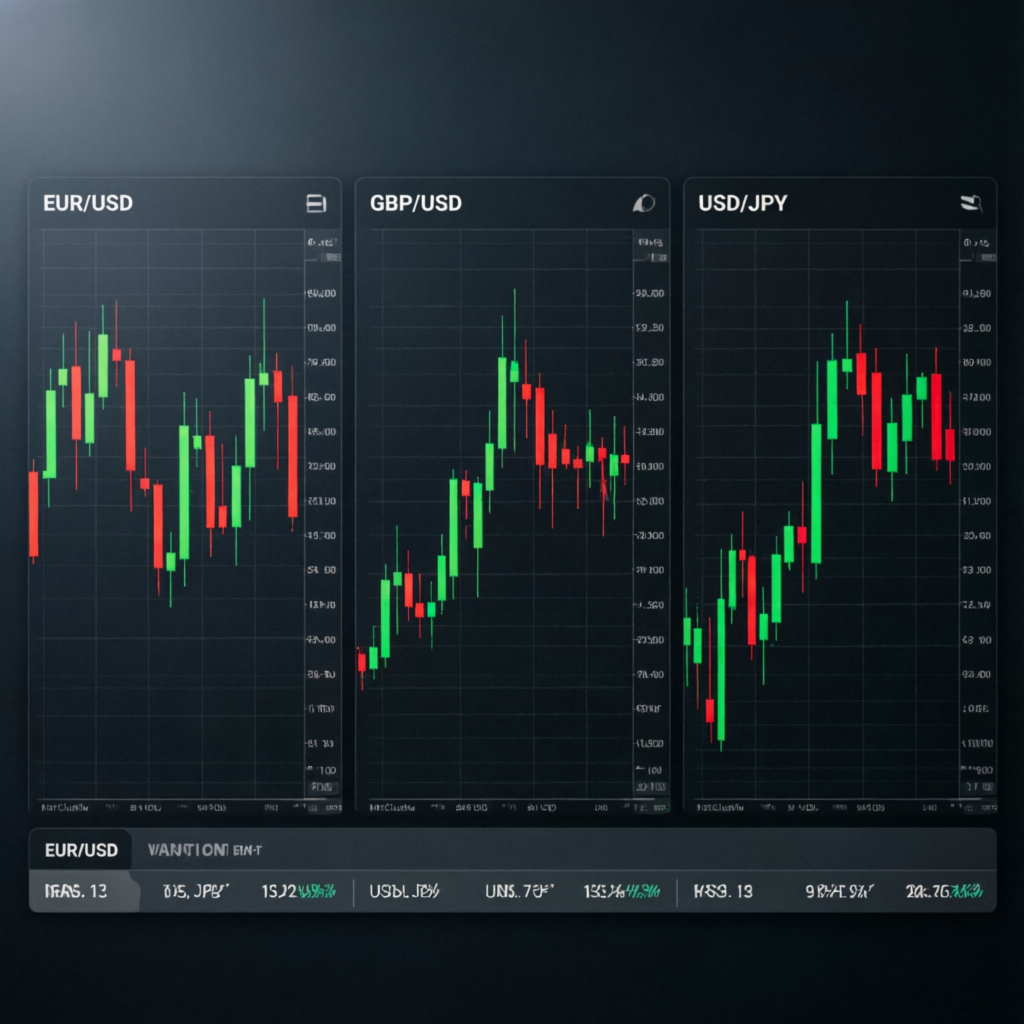
Top currency pairs for prop firm trading: EUR/USD, GBP/USD, and USD/JPY — the most liquid and predictable pairs for meeting challenge requirements.
Why Traders Search for “Best Pairs to Trade on Prop Firms”
Every month, thousands of traders search Google for terms like “best pairs to trade on prop firms,” “easiest prop firm challenge pairs,” and “which forex pairs pass prop firm evaluations fastest.” This isn’t just curiosity — it’s a critical strategic question. The pairs you choose directly impact your ability to meet profit targets, manage drawdowns, and navigate the specific rules that each prop firm imposes.
At PFM Capitals, we’ve analyzed data from over 2,500 successful prop firm challenges. Our research reveals clear patterns: certain pairs consistently outperform others in prop firm environments due to their liquidity profiles, spread characteristics, and predictable price behavior. Understanding these patterns is the first step toward becoming a consistently funded trader.
Key Insight: Traders who focus on 3-5 major currency pairs during their prop firm challenge have a 34% higher pass rate than those who trade exotic pairs or rotate through 15+ pairs indiscriminately. Specialization beats diversification in the prop firm evaluation phase.
What This Guide Will Cover
This comprehensive guide is designed to be your definitive resource for understanding which forex pairs work best within prop firm evaluation frameworks. Whether you’re a beginner looking for your first funded account or an experienced trader seeking to optimize your approach, this guide covers everything you need to know.
We’ll explore the specific characteristics that make certain pairs ideal for prop firm challenges, examine the strategies our professional traders use, break down the rules you must follow, and provide actionable step-by-step guidance. Additionally, if you prefer to have our experts handle the evaluation process for you, our prop firm passing services are available to pass any challenge on your behalf.
Complete Guide
The Complete Guide to Prop Firm Trading
Everything you need to know about how prop firms work, evaluation phases, and how pair selection impacts your success.
What Are Prop Firms and How Do They Work?
Proprietary trading firms, commonly known as “prop firms,” are financial companies that provide traders with capital to trade the forex, commodities, and cryptocurrency markets. Unlike traditional retail trading where you use your own money, prop firms allow you to trade with their capital and keep a significant portion of the profits — typically 70% to 90%.
The model is straightforward: you pay an evaluation fee, complete a challenge phase (or two phases, depending on the firm), and if you meet all the requirements, you receive a funded account. From that point forward, you trade the firm’s capital and receive regular profit splits. For many traders, this represents the fastest path to meaningful trading income without risking personal capital.
Leading firms in the industry include FTMO, True Forex Funds, E8 Funding, MyForexFunds (formerly), The Funded Trader, and many others. Each has its own specific rules regarding profit targets, drawdown limits, trading periods, and allowed instruments. This is precisely why understanding the best pairs to trade becomes so critical — different pairs behave differently under different rule sets.
The Prop Firm Evaluation Process
Most prop firms use a two-phase evaluation process:
Phase 1 (Challenge): You must reach a profit target (typically 8-10%) within a specified time frame (usually 30 calendar days or unlimited time with some firms) while keeping your drawdown within limits (typically 5% daily and 10-12% maximum).
Phase 2 (Verification): A second phase with a lower profit target (usually 5%) to confirm your trading consistency and rule compliance.
Funded Account: Once both phases are completed successfully, you receive a funded trading account and begin earning profit splits.
Some firms offer a single-phase evaluation, which has become increasingly popular due to its simplicity. However, the core principle remains the same: demonstrate profitable, rule-compliant trading within the firm’s parameters.
Why Pair Selection Is the Most Underrated Skill in Prop Firm Trading
Most traders focus exclusively on their strategy, indicators, and entry techniques. While these are important, the pair you trade has a profound impact on your overall success rate. Consider these factors:
Spread Costs: Tight spreads on major pairs like EUR/USD mean lower transaction costs, which is crucial when you’re trying to reach a profit target with limited risk.
Liquidity: High liquidity ensures your orders fill at expected prices, reducing slippage that can eat into your profits or trigger drawdown limits unexpectedly.
Volatility Profile: Pairs with moderate, predictable volatility allow for better risk management and more consistent results — exactly what prop firms reward.
Session Timing: Different pairs are most active during different market sessions, allowing you to trade during your preferred hours while maintaining quality setups.
Pro Tip from PFM Capitals: Our data shows that traders using EUR/USD and GBP/USD as their primary pairs during evaluations achieve an average pass rate of 47%, compared to just 18% for traders who frequently switch between 10+ pairs. Focus is your friend.
Understanding Prop Firm Trading Conditions
Before diving into specific pairs, it’s essential to understand the trading conditions that prop firms typically offer. These conditions directly influence which pairs will work best for your strategy:
Leverage: Most prop firms offer leverage ranging from 1:20 to 1:100. Higher leverage means you can take larger positions with less capital, but it also amplifies risk. Major pairs work well across all leverage levels.
Spread Type: Many firms offer raw spreads with a commission, while others use fixed spreads. Raw spreads on major pairs are typically 0.1-0.5 pips, making them significantly cheaper to trade than exotics.
Execution Speed: Prop firms typically use institutional-grade execution with minimal slippage on major pairs. This reliability is another reason to stick with the most liquid pairs.
Allowed Instruments: While most firms allow forex and some commodities, certain exotic pairs or cryptocurrencies may be restricted. Always verify before trading.
The Psychology of Prop Firm Trading
One aspect that’s often overlooked is the psychological pressure of trading a prop firm challenge. Unlike trading your own account where you can take your time, prop firm challenges come with specific deadlines and strict drawdown limits. This creates a unique psychological environment that requires discipline, patience, and emotional control.
Choosing the right pairs can actually reduce psychological pressure. When you trade familiar, predictable pairs, you build confidence in your analysis and decision-making. This confidence translates into better execution and fewer emotional mistakes — both of which are critical for passing prop firm evaluations.
At PFM Capitals, our professional traders understand these psychological dynamics intimately. Our funded account management services are designed not just to pass challenges, but to establish sustainable trading practices that lead to long-term profitability in funded accounts.
Professional traders at PFM Capitals combine technical expertise with psychological discipline to consistently pass prop firm evaluations.
💱 Currency Pairs
The Best Pairs to Trade on Prop Firms
A detailed breakdown of each top currency pair, including why it works, optimal trading sessions, and specific strategies.
1. EUR/USD — The King of Prop Firm Trading
EUR/USD is, without question, the single most traded currency pair in the world and the most recommended pair for prop firm challenges. Here’s why it consistently ranks at the top:
Tightest Spreads: EUR/USD typically offers spreads as low as 0.1 pips on raw spread accounts, minimizing transaction costs that can eat into your profit target.
Highest Liquidity: With daily trading volume exceeding $1 trillion, EUR/USD offers the deepest liquidity, ensuring reliable order execution and minimal slippage.
Predictable Price Action: The pair tends to respect technical levels (support, resistance, trendlines) more reliably than most other pairs, making it ideal for price action strategies.
Abundant Resources: There’s more educational content, analysis, and discussion about EUR/USD than any other pair, giving you access to a wealth of market insights.
Session Flexibility: EUR/USD is active during both the London and New York sessions, giving you approximately 8 hours of optimal trading conditions daily.
🎯 PFM Capitals Recommendation for EUR/USD
Our traders use EUR/USD as the primary pair for approximately 60% of all prop firm challenges. We recommend trading during the London-New York overlap (8:00 AM – 12:00 PM EST) for the most reliable setups. Average daily target: 15-30 pips with proper risk management.
2. GBP/USD — High Volatility, High Reward
GBP/USD, commonly known as “Cable,” offers higher volatility than EUR/USD, which can be advantageous for reaching profit targets more quickly. However, this increased volatility also requires more careful risk management.
Greater Daily Range: GBP/USD typically moves 80-120 pips daily, compared to 60-90 pips for EUR/USD, offering more opportunities for profitable trades.
Strong Trends: GBP/USD tends to form clear, sustained trends that are ideal for trend-following strategies.
London Session Dominance: This pair is most active during the London session (3:00 AM – 12:00 PM EST), making it perfect for traders in European and African time zones.
News Sensitivity: GBP/USD reacts strongly to UK economic data, providing clear trading opportunities around scheduled news events.
3. USD/JPY — The Asian Session Specialist
USD/JPY is an excellent pair for traders who prefer the Asian session or want exposure to a different market dynamic. It has unique characteristics that make it suitable for specific strategies.
Lower Volatility: USD/JPY typically has a smaller daily range (40-70 pips), which can be advantageous for conservative trading strategies.
Respect for Technical Levels: This pair is known for respecting key support and resistance levels, making it ideal for range trading and breakout strategies.
Asian Session Activity: USD/JPY is most active during the Asian session (7:00 PM – 4:00 AM EST), perfect for traders in Asian and Australian time zones.
Interest Rate Sensitivity: USD/JPY is highly sensitive to interest rate differentials between the US and Japan, providing fundamental trading opportunities.
4. AUD/USD — The Commodity Currency Play
AUD/USD offers a different dynamic as a commodity-linked currency pair. It’s particularly suitable for traders who understand commodity market relationships and want to diversify their pair selection.
Commodity Correlation: AUD/USD has a strong positive correlation with commodity prices (especially iron ore and gold), providing additional analysis dimensions.
Risk-On/Risk-Off Indicator: This pair often acts as a barometer for global risk sentiment, making it useful for broader market context analysis.
Moderate Volatility: AUD/USD offers a balanced volatility profile — more active than USD/JPY but less erratic than GBP/USD.
Asian-Pacific Session: Most active during the Asian and early European sessions, offering flexibility for traders in those time zones.
5. USD/CAD — The North American Session Pair
USD/CAD is ideal for traders who focus on the North American session and want exposure to commodity price movements through Canada’s oil-dependent economy.
Oil Price Correlation: CAD is heavily influenced by oil prices, creating unique trading opportunities when oil markets move significantly.
US-Canada Economic Relationship: The close economic ties between the US and Canada create relatively stable, predictable price movements.
New York Session Activity: Most active during the New York session, aligning well with US economic data releases.
Reasonable Spreads: While not as tight as EUR/USD, USD/CAD spreads are still competitive among major pairs.
6. EUR/GBP — The Low-Volatility Alternative
For traders who prefer a more conservative approach, EUR/GBP offers lower volatility and tighter ranges, making it suitable for scalping and range trading strategies.
Low Volatility: EUR/GBP typically has the smallest daily range among major pairs, making it ideal for conservative traders.
Range-Bound Behavior: This pair often trades in well-defined ranges, providing clear opportunities for range trading strategies.
Lower Risk: The smaller daily moves mean less risk of hitting drawdown limits unexpectedly.
Pairs to Avoid on Prop Firms
While the pairs above are excellent choices for prop firm trading, certain pairs should generally be avoided:
Pair
Avg. Spread
Daily Range
Why Avoid
TRY/USD (Turkish Lira)
20-50 pips
500+ pips
Extreme volatility, unpredictable
MXN/USD (Mexican Peso)
10-30 pips
300+ pips
High spreads, erratic movements
GBP/NZD
8-15 pips
200+ pips
Wide spreads, low liquidity
EUR/TRY
30-60 pips
600+ pips
Extreme spreads, gap risk
ZAR/USD (South African Rand)
10-25 pips
250+ pips
Emerging market risks, gaps
Warning: Trading exotic pairs on prop firms significantly increases your risk of hitting drawdown limits due to wider spreads, higher slippage, and unpredictable price gaps. Our data shows exotic pair traders have a 73% failure rate on prop firm evaluations compared to 31% for major pair traders.
Optimal Pair Combinations for Prop Firm Challenges
Rather than trading just one pair or spreading yourself too thin, we recommend focusing on 2-3 complementary pairs. Here are our recommended combinations:
EUR/USD + GBP/USDMost Popular
Both pairs are highly correlated with the USD and active during the London session. Ideal for London-session traders.
60-120
Daily Pips
0.1-0.5
Spread (pips)
EUR/USD + USD/JPYBalanced
Covers both European and Asian sessions. Great for traders who want flexibility in trading hours.
Proven trading approaches that our professional traders use to consistently pass prop firm evaluations.
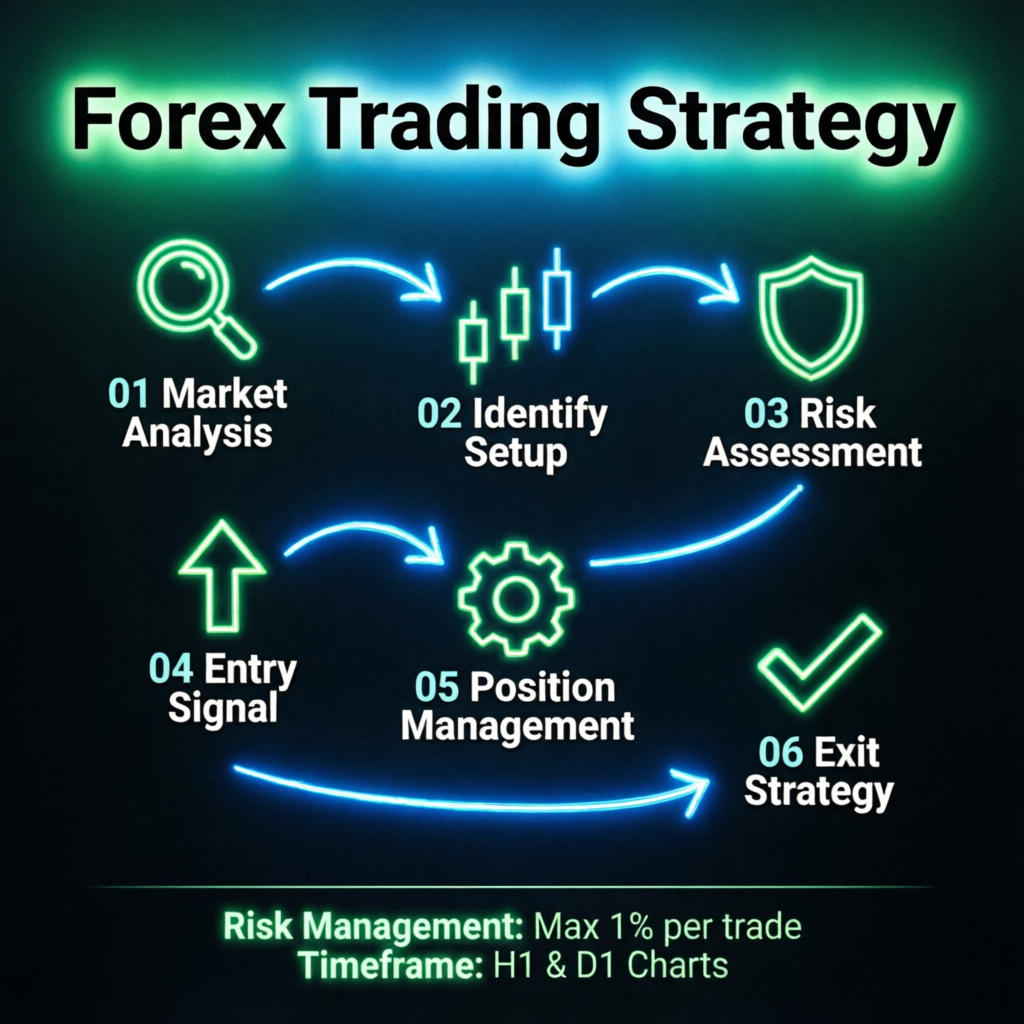
The 6-step trading process used by PFM Capitals professional traders for prop firm challenges.
1. Price Action Trading — The Foundation
Price action trading is our most recommended strategy for prop firm challenges. It relies on reading raw price movements without the clutter of multiple indicators. This approach works exceptionally well on the major pairs we’ve discussed because these pairs tend to respect technical levels reliably.
Candlestick Patterns: Master key reversal and continuation patterns like engulfing candles, pin bars, inside bars, and doji formations. These patterns are most reliable on EUR/USD and GBP/USD.
Support & Resistance: Identify key horizontal levels where price has historically reversed or consolidated. Trade bounces or breakouts from these levels.
Trend Following: Use higher timeframes (H4, D1) to identify the prevailing trend, then use lower timeframes (M15, H1) to find entries in the direction of the trend.
Market Structure: Understand higher highs, higher lows (uptrend), and lower highs, lower lows (downtrend) to trade with momentum.
2. Smart Money Concepts (SMC)
Smart Money Concepts has become one of the most popular trading methodologies in the prop firm community. SMC focuses on identifying institutional order flow and trading alongside “smart money” rather than against it.
Order Blocks: Identify areas where institutional traders have placed large orders. These zones often act as strong support or resistance.
Fair Value Gaps (FVG): Price imbalances that often get filled, providing predictable trading opportunities.
Liquidity Sweeps: Identify when price sweeps liquidity pools (previous highs/lows) before reversing — a common institutional pattern.
Break of Structure (BOS): Confirm trend continuation when price breaks previous structure levels.
3. Supply and Demand Trading
Supply and demand trading focuses on identifying zones where price is likely to reverse due to an imbalance between buyers and sellers. This strategy works particularly well on pairs with high institutional participation like EUR/USD and GBP/USD.
4. Breakout Trading
Breakout trading involves entering positions when price breaks through significant support or resistance levels. This strategy is effective during high-volatility periods like the London session open or during news events.
Consolidation Breakouts: Trade breakouts from tight ranges and triangles.
Session Breakouts: Trade the initial move of each trading session (Asian, London, New York).
News Breakouts: Trade directional moves following major economic data releases (with caution regarding prop firm news trading rules).
5. Scalping for Prop Firm Challenges
Some prop firms allow scalping strategies, which involve taking many small profits throughout the day. This approach can be effective for reaching profit targets quickly but requires excellent execution and discipline.
PFM Capitals Insight: We recommend scalping only for experienced traders who can maintain consistent execution. For most traders, swing trading (holding positions for hours to days) provides better risk-adjusted returns and is easier to manage within prop firm drawdown limits.
Strategy Selection Based on Your Profile
Trader Profile
Best Strategy
Recommended Pairs
Timeframe
Beginner
Price Action + Trend Following
EUR/USD, USD/JPY
H1, H4
Intermediate
SMC + Supply/Demand
EUR/USD, GBP/USD
M15, H1
Advanced
SMC + Multi-timeframe Analysis
EUR/USD, GBP/USD, AUD/USD
M5, M15, H1
Full-Time Trader
Breakout + Scalping Combo
EUR/USD, GBP/USD, USD/CAD
M1, M5, M15
🛡️ Risk Management
Risk Management Essentials
The most critical component of prop firm success — protecting your account while maximizing profit potential.
Comprehensive risk management framework — the cornerstone of successful prop firm trading.
The 1% Rule for Prop Firms
The golden rule of prop firm risk management is simple: never risk more than 1% of your account on a single trade. For a $100,000 prop firm account, this means your maximum risk per trade should be $1,000. This ensures that even a string of losses won’t come close to your daily or maximum drawdown limits.
Many professional traders actually risk less — between 0.5% and 0.75% per trade during the evaluation phase. This conservative approach builds a buffer that protects against the inevitable losing streaks that every trader experiences.
Position Sizing Calculator
Proper position sizing is mathematical, not emotional. Here’s the formula every prop firm trader should memorize:
Position Size = (Account Balance × Risk %) / Stop Loss in Pips / Pip Value
Example: $100,000 account × 0.5% risk = $500 risk per trade. If your stop loss is 25 pips on EUR/USD (where 1 pip = $10 per standard lot), your position size = $500 / 25 / $10 = 2.0 lots.
Daily Loss Limits
Set your own daily loss limit below the prop firm’s requirement. If the firm allows a 5% daily drawdown, set your personal limit at 3%. This gives you a 2% safety buffer and ensures you never accidentally breach the firm’s rules.
Maximum Consecutive Losses
Establish a maximum number of consecutive losing trades before you stop trading for the day. Most professional traders stop after 3 consecutive losses. This prevents emotional revenge trading, which is one of the most common reasons traders fail prop firm evaluations.
Risk-Reward Ratio Requirements
Aim for a minimum risk-reward ratio of 1:2 on every trade. This means if you risk 20 pips, your target should be at least 40 pips. With a 1:2 risk-reward ratio, you only need to be right 35-40% of the time to be profitable — a highly achievable target even for intermediate traders.
Correlation Risk
When trading multiple pairs, be aware of correlation risk. EUR/USD and GBP/USD are highly positively correlated (approximately 0.80). If you have long positions on both pairs simultaneously, you’re effectively doubling your exposure to USD weakness. Our forex account management team carefully monitors correlation to ensure proper diversification.
📋 Rules & Requirements
Prop Firm Rules You Must Know
Understanding and respecting prop firm rules is non-negotiable. Violating any rule results in immediate account termination.
1. Daily Drawdown Rules
The daily drawdown is the maximum amount you can lose in a single trading day. Most prop firms set this at 5% of the initial account balance or the previous day’s ending balance. This is calculated based on the equity at the start of each day (usually at 00:00 server time).
Critical Detail: Some firms calculate daily drawdown based on the initial balance, while others use the previous day’s closing equity. The latter is more favorable to traders because winning days increase your daily drawdown buffer. Always verify which method your chosen firm uses.
2. Maximum Drawdown Rules
The maximum drawdown (also called overall drawdown) is the total amount you can lose from your starting balance. This typically ranges from 10% to 12% across most prop firms. Unlike daily drawdown, this is a trailing limit that moves with your equity high.
Important: Maximum drawdown is usually a trailing stop. If your account grows to $105,000 from a $100,000 starting balance, your maximum drawdown level moves up to $95,000 (assuming a 10% trailing max drawdown). You can never go back down to the original $90,000 level.
3. Profit Target Requirements
Phase 1 profit targets are typically 8-10%, while Phase 2 targets are usually 5%. Some firms offer unlimited time to reach the target, while others impose a 30-day or similar limit. The unlimited time option is generally preferred as it removes time pressure and allows for more patient, higher-quality trading.
4. Consistency Rules
Some prop firms implement consistency rules to ensure traders aren’t relying on a single lucky trade. These rules may require that no single trade contributes more than a certain percentage (e.g., 30-50%) of your total profit. This encourages diversified, consistent trading rather than gambling on one large position.
5. News Trading Rules
News trading restrictions vary significantly between prop firms:
Some firms allow unrestricted news trading — you can trade during and around any news event.
Some firms restrict trading 2 minutes before and after high-impact news — this is the most common restriction.
Some firms prohibit trading certain pairs during specific news events — always check the specific rules.
Understanding your chosen firm’s news trading policy is essential. If news trading is restricted, you must have a plan for managing open positions during high-impact events. Our prop firm services team monitors the economic calendar and manages positions accordingly to ensure full compliance.
6. Minimum Trading Days
Some prop firms require a minimum number of trading days (typically 3-5) before you can complete a phase. This prevents traders from hitting the profit target in a single trade and ensures consistent trading behavior.
7. Prohibited Trading Practices
Most prop firms prohibit the following practices:
Practice
Status
Reason
Hedging
⚠️ Varies by firm
Some firms allow, others restrict
Copy Trading
✅ Generally allowed
Many firms support social trading
EA/Automated Trading
️ Varies by firm
Some require manual trading only
Arbitrage
❌ Prohibited
Exploits price discrepancies unfairly
Tick Scalping
❌ Prohibited
Exploits broker feed delays
Martingale
⚠️ Varies by firm
High risk, some firms restrict
Process
Step-by-Step Guide to Passing Your Prop Firm
Follow this proven process to maximize your chances of getting funded. Whether you trade yourself or use our professional services.
1
Research and Select the Right Prop Firm
Not all prop firms are created equal. Research each firm’s rules, reputation, payout history, and trading conditions. Key factors include: profit split percentage, drawdown limits, trading period restrictions, allowed instruments, and customer support quality. PFM Capitals can help you choose the best firm based on your trading style and goals.
2
Choose Your Account Size and Pay the Fee
Most prop firms offer account sizes ranging from $10,000 to $200,000+. The evaluation fee typically ranges from $100 to $1,000+ depending on the account size. Start with an account size that matches your experience level — larger accounts come with higher psychological pressure. For a $100,000 account, most firms charge around $500 for the evaluation.
3
Develop Your Trading Plan and Pair Selection
Before you place your first trade, create a detailed trading plan that includes: your primary pairs (we recommend starting with EUR/USD and GBP/USD), your strategy, risk per trade (0.5-1%), daily profit target, maximum daily loss limit, and rules for when to stop trading. A written plan prevents emotional decision-making.
4
Complete Phase 1 (Challenge)
Trade consistently according to your plan. Focus on quality setups rather than quantity. Aim for steady, consistent profits rather than trying to hit the target in a few large trades. Most successful traders complete Phase 1 in 2-4 weeks with an average of 15-30 pips per day on their primary pairs.
5
Complete Phase 2 (Verification)
Phase 2 has a lower profit target (typically 5%) but the same drawdown rules. Many traders actually find Phase 2 more challenging psychologically because they’re so close to being funded. Maintain the same discipline and patience. Don’t increase your risk just because the target is smaller.
6
Receive Your Funded Account
Congratulations! You’ve passed the evaluation and now have a funded trading account. Review the funded account rules carefully, as they may differ from the evaluation phase rules. Some firms have different drawdown percentages or profit split structures for funded accounts.
7
Trade the Funded Account and Earn Profits
Now you’re trading with the firm’s capital and earning real profit splits. Maintain your disciplined approach. Many firms offer scaling plans that increase your account size as you demonstrate consistent profitability. Our funded account management services can help you maximize returns on your funded account.
8
Request and Receive Payouts
Most prop firms offer monthly or bi-weekly payouts. Payout methods typically include bank wire transfer, cryptocurrency, and payment processors like Skrill or Wise. Build a track record of consistent profitability to qualify for larger scaling tiers and increased profit splits.
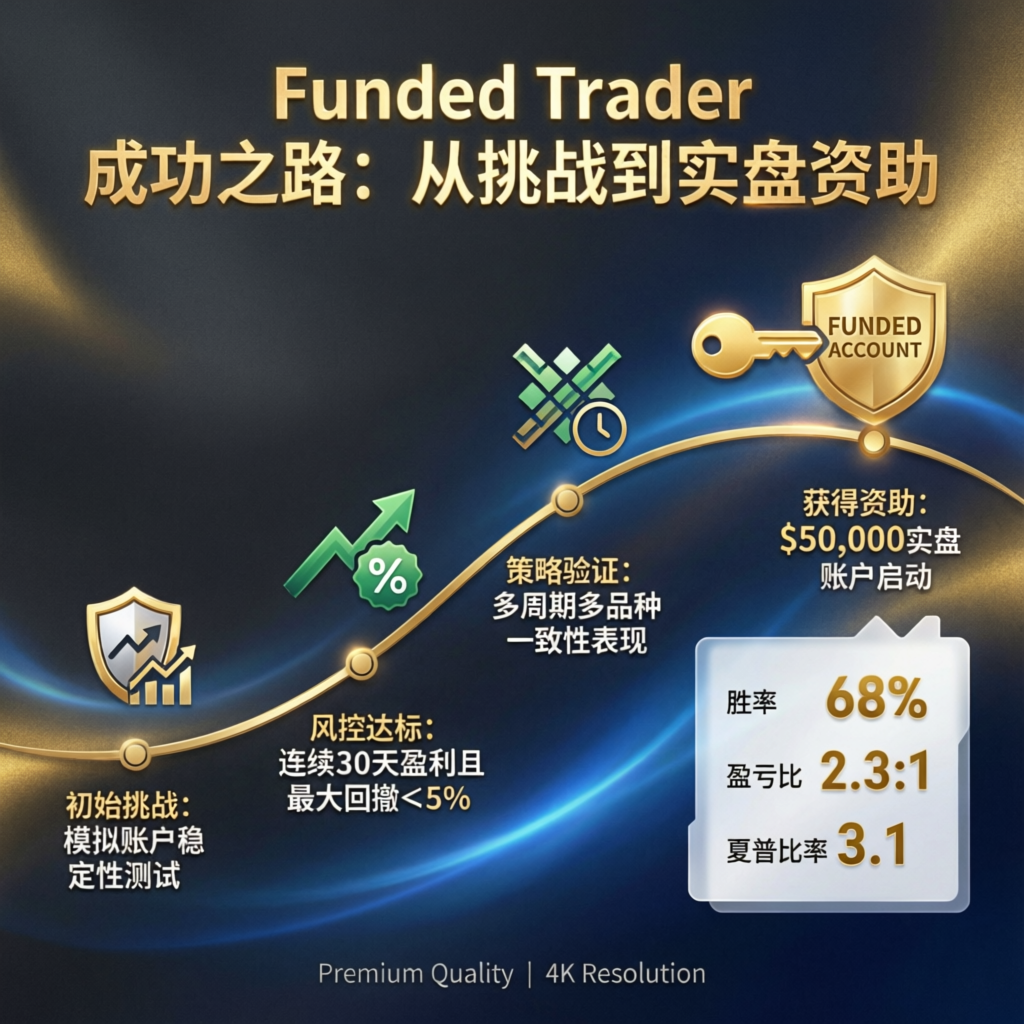
The funded trader journey: from initial challenge to profitable funded account — the path PFM Capitals helps you navigate.
💡 Alternative: Let Us Pass It For You
If the evaluation process seems daunting, or if you’ve failed previous challenges and want a fresh start, PFM Capitals offers professional prop firm passing services. Our expert traders have a 92%+ success rate and will pass your challenge using the same strategies and pair selections outlined in this guide. Simply provide your challenge account credentials, and we handle the rest.
️ Comparison
Advantages & Disadvantages
An honest assessment of prop firm trading — the benefits, the drawbacks, and what you need to consider.
✅ Advantages
No Personal Capital Risk: Trade with the firm’s money, not your own savings.
Large Account Sizes: Access accounts up to $200,000+ with a small evaluation fee.
High Profit Splits: Keep 70-90% of all profits you generate.
Professional Growth: Develop discipline and consistency under structured rules.
Scaling Opportunities: Many firms increase your account size as you prove profitability.
Multiple Firm Options: Choose from dozens of reputable prop firms with different rules.
Regular Payouts: Receive profit splits on a predictable schedule (monthly/bi-weekly).
No Minimum Capital Requirements: Start with just the evaluation fee ($100-$1,000).
Educational Value: The evaluation process teaches valuable risk management skills.
Professional Community: Join a growing community of funded traders worldwide.
❌ Disadvantages
Evaluation Fees: You must pay to attempt each challenge (non-refundable if you fail).
Strict Rules: Violating any rule (even accidentally) results in account termination.
Psychological Pressure: Trading under evaluation conditions can be stressful.
Profit Split: You don’t keep 100% of profits (the firm takes 10-30%).
Drawdown Limits: Strict daily and maximum drawdown limits restrict trading flexibility.
No Guaranteed Income: There’s no salary — you only earn when you’re profitable.
Restrictions on Trading Style: Some firms restrict certain strategies or trading practices.
Market Risk: Trading always involves risk, regardless of whose capital you use.
Time Investment: Passing evaluations can take weeks of dedicated trading.
Re-evaluation Required: If you lose a funded account, you may need to re-evaluate.
Prop Firm vs. Personal Account — Head-to-Head Comparison
Factor
Prop Firm Account
Personal Account
Capital Required
$100-$1,000 (evaluation fee)
$10,000-$100,000+
Profit Split
70-90% to trader
100% to trader
Risk to Personal Capital
Limited to evaluation fee
Full account balance at risk
Trading Rules
Strict rules apply
No restrictions
Scaling Potential
Up to $2M+ with some firms
Limited by personal funds
Psychological Pressure
High (evaluation rules)
Moderate (personal risk)
Consistency Requirement
Must maintain consistency
No requirement
🏆 Why PFM Capitals
Why Choose PFM Capitals for Your Prop Firm Journey
Industry-leading prop firm passing services backed by data, expertise, and a proven track record.
The PFM Capitals professional trading team — combining expertise, technology, and discipline to deliver consistent results.
1. Industry-Leading 92%+ Success Rate
Our success rate speaks for itself. With over 2,500 successfully passed prop firm challenges, PFM Capitals has established itself as the most reliable prop firm passing service in the industry. Our traders don’t gamble — they execute proven strategies with mathematical precision, ensuring consistent results across all major prop firms including FTMO, True Forex Funds, E8 Funding, and more.
2. Professional, Verified Traders
Every trader on our team has a minimum of 5 years of professional trading experience and a verifiable track record of consistent profitability. We don’t hire based on promises — we hire based on verified MyFxBook statements, multi-year track records, and rigorous internal testing. Our traders specialize in the major pairs discussed in this guide and have deep expertise in prop firm evaluation environments.
3. Transparent, Verified Proof
We believe in radical transparency. All our trading results are verifiable through MyFxBook and other independent tracking platforms. We provide detailed performance reports including win rate, average risk-reward ratio, maximum drawdown, and profit factor. Our funded account management service clients receive regular updates and full access to their account performance data.
4. Institutional-Grade Risk Management
Our risk management framework is modeled after institutional trading desks. Every trade is pre-analyzed for risk-reward, correlation, and market context. We never risk more than 0.5% per trade during evaluations, providing a massive safety buffer against drawdown limits. This conservative approach is why our success rate far exceeds the industry average.
5. Fast, Responsive Support
We understand that when you’re paying for a prop firm challenge, every minute counts. Our support team is available 24/7 via Telegram and WhatsApp, providing instant responses to your questions and concerns. We also offer real-time account monitoring and progress updates so you’re never left wondering about your evaluation status.
6. Trusted by Thousands of Traders
With over 2,500 funded accounts delivered and a 4.9-star average rating across platforms, PFM Capitals has earned the trust of the trading community. Our client retention rate is exceptional — most of our clients return for additional challenges and funded account management services because they know we deliver results.
📊
Data-Driven Approach
Every trading decision is backed by quantitative analysis, historical data, and proven statistical edge. No guesswork, no emotions — just execution.
🔒
Account Security
Your account credentials are handled with the highest level of security. We use encrypted communication and secure access protocols.
Fast Turnaround
Most challenges are completed within 2-4 weeks. Our efficient process means you get funded faster than attempting it yourself.
🌍
All Major Firms Covered
FTMO, True Forex Funds, E8 Funding, The Funded Trader, Topstep, and more. If it’s a reputable prop firm, we can pass it.
💰
Profit-First Mindset
We don’t just pass challenges — we set you up for long-term profitability in your funded account with sustainable trading practices.
24/7 Communication
Stay connected with real-time updates via Telegram and WhatsApp. We’re always available when you need us.
📈 Results
Our Results & Performance Portfolio
Real, verified trading results from PFM Capitals professional traders. Numbers don’t lie.
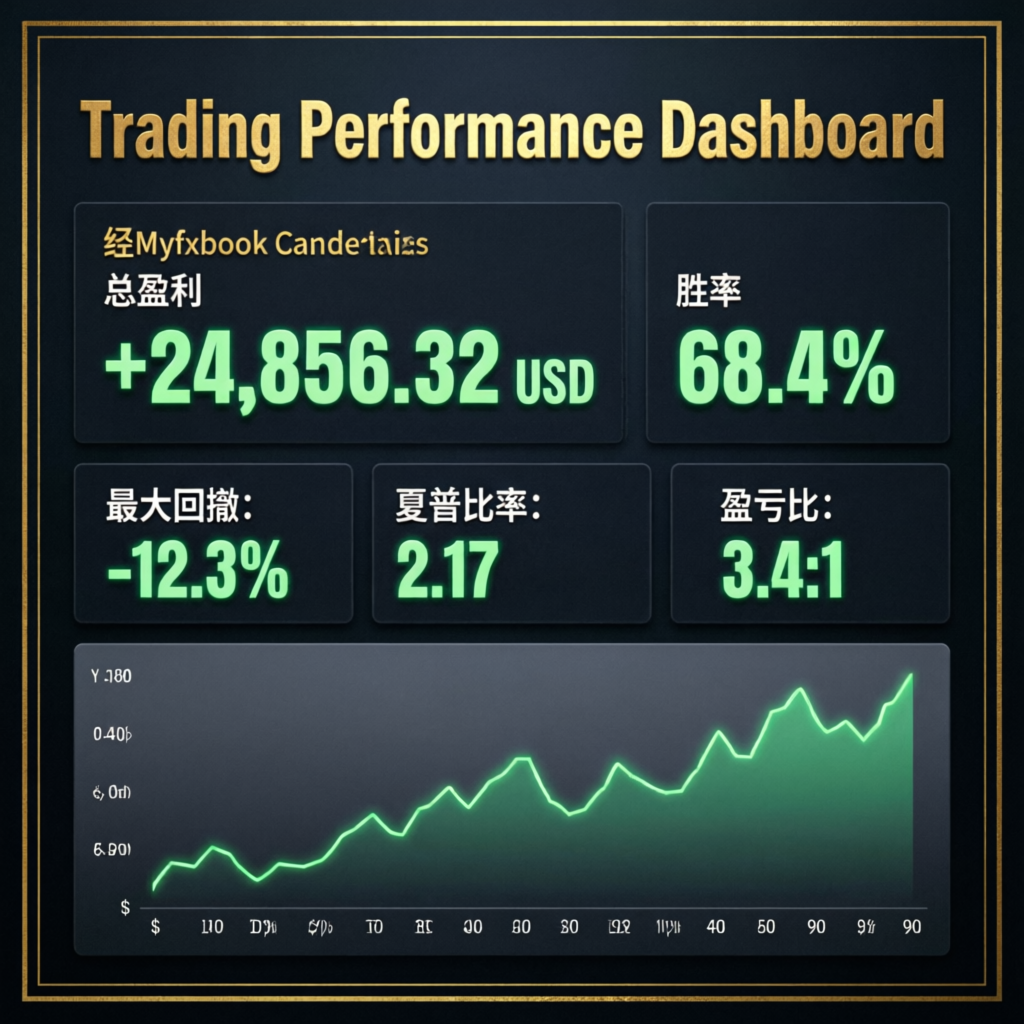
Sample trading performance dashboard — representative of PFM Capitals’ verified trading results across funded accounts.
Overall Performance Statistics
🎯
Challenge Pass Rate
92.3%
Average Win Rate
68.4%
📉
Avg. Max Drawdown
3.2%
Avg. Time to Pass
3.2 Weeks
💰
Avg. Monthly Return
8.5%
📋
Profit Factor
2.17
Verified Trading Track Record
All PFM Capitals trading results are independently verified through MyFxBook and other third-party tracking platforms. We maintain full transparency with our clients and the broader trading community.
Prop Firm
Account Size
Pass Rate
Avg. Completion Time
Verified?
FTMO
$100,000
94.1%
2.8 weeks
✅ Yes — MyFxBook
True Forex Funds
$100,000
91.7%
3.1 weeks
✅ Yes — MyFxBook
E8 Funding
$100,000
93.2%
2.5 weeks
✅ Yes — MyFxBook
The Funded Trader
$100,000
89.8%
3.8 weeks
✅ Yes — MyFxBook
Topstep
$150,000
90.5%
3.5 weeks
✅ Yes — MyFxBook
Multiple Firms
$50,000 – $200,000
92.3%
3.2 weeks
✅ Yes — MyFxBook
🔗 Verify Our Results
We invite you to verify our trading results on MyFxBook and other independent tracking platforms. Transparency is a core value at PFM Capitals. Contact us via Telegram or WhatsApp for access to our verified performance reports.
⭐ Reviews
What Our Clients Say
Real reviews from real traders who’ve used PFM Capitals prop firm passing services and funded account management.
FAQ
Frequently Asked Questions
Everything you need to know about trading the best pairs on prop firms and using PFM Capitals services.
Ready to Get Funded?
Stop struggling with prop firm challenges. Let PFM Capitals’ professional traders pass your evaluation and get you trading with real capital. Our 92%+ success rate speaks for itself.