Swing Trading Strategy Explained | PFM Capitals – Expert Prop Firm Passing & Funded Account Management
Trusted by 2,800+ Traders Worldwide

Swing Trading Strategy
Explained: The Ultimate Guide

Master the art of swing trading to pass prop firm evaluations and manage funded accounts profitably. Learn from professional traders at PFM Capitals.

94%
Pass Rate
$12M+
Funds Managed
2,800+
Happy Clients
24/7
Support
📋

Swing Trading Strategy — Quick Summary

A comprehensive overview of what you need to know about swing trading for prop firm success.

📊
Difficulty Level
Intermediate
🎯
Profit Target
8%–10%
Max Drawdown
5% Daily / 10% Total
🏆
Best Strategy
Price Action + S/R
⏱️
Passing Time
2–4 Weeks
⚠️
Risk Level
Medium (1–2% per trade)

What Is Swing Trading and Why Do Traders Search for It?

Swing trading is one of the most popular and effective trading strategies used by professional traders worldwide. It involves holding positions for a period ranging from several days to a few weeks, capturing the “swings” or medium-term price movements in financial markets. Unlike day trading, which requires constant screen monitoring, or position trading, which may hold trades for months, swing trading strikes the perfect balance between active engagement and strategic patience.

For traders seeking to pass prop firm evaluations, swing trading has emerged as the go-to strategy for good reason. Prop firms like FTMO, MyForexFunds, The5%ers, and others set specific profit targets and strict drawdown limits that require traders to be both profitable and disciplined. Swing trading allows you to achieve the required profit targets while maintaining the risk management discipline that prop firms demand.

When traders search for “swing trading strategy explained,” they are typically looking for actionable, step-by-step guidance on how to apply this approach to real trading scenarios — especially in the context of prop firms passing services and funded account management services. They want to understand not just the theory, but the practical execution that leads to consistent profitability.

Key Insight: According to a 2024 survey of funded traders, 67% of successful prop firm traders use swing trading as their primary strategy. This makes it the single most effective approach for passing evaluations and maintaining funded accounts. At PFM Capitals, swing trading forms the foundation of our proprietary trading methodology.

Why do so many traders gravitate toward swing trading? The answer lies in its unique advantages: it reduces the stress of constant monitoring, minimizes the impact of market noise and micro-fluctuations, allows for more thorough analysis before entering trades, and provides a better risk-to-reward ratio compared to scalping or day trading. For prop firm traders specifically, these benefits translate directly into a higher probability of passing challenges and maintaining funded accounts over the long term.

At PFM Capitals, we specialize in helping traders leverage swing trading strategies to pass their prop firm evaluations. Our prop firms passing service has helped thousands of traders achieve their funding goals, and our funded account management service ensures that once funded, traders can maximize their earning potential through professional-grade forex account management.

The Complete Guide to Swing Trading for Prop Firm Success

Understanding swing trading at a deep level is essential for anyone serious about passing prop firm evaluations and building a sustainable trading career. This comprehensive guide breaks down every aspect of swing trading, from market analysis to trade execution, specifically tailored for prop firm environments.

Understanding the Swing Trading Timeframe

Swing trading operates primarily on the H4 (4-hour), D1 (daily), and W1 (weekly) timeframes. These timeframes provide the optimal balance between signal reliability and trade frequency. The daily chart is particularly favored by prop firm traders because it filters out most of the market noise while still providing enough trading opportunities to meet profit targets within the evaluation period.

When analyzing the daily chart, swing traders look for key structural elements: higher highs and higher lows in uptrends, lower highs and lower lows in downtrends, and clear support and resistance zones. These structural markers serve as the foundation for all swing trading decisions and are crucial for prop firm services that require consistent, rule-based trading approaches.
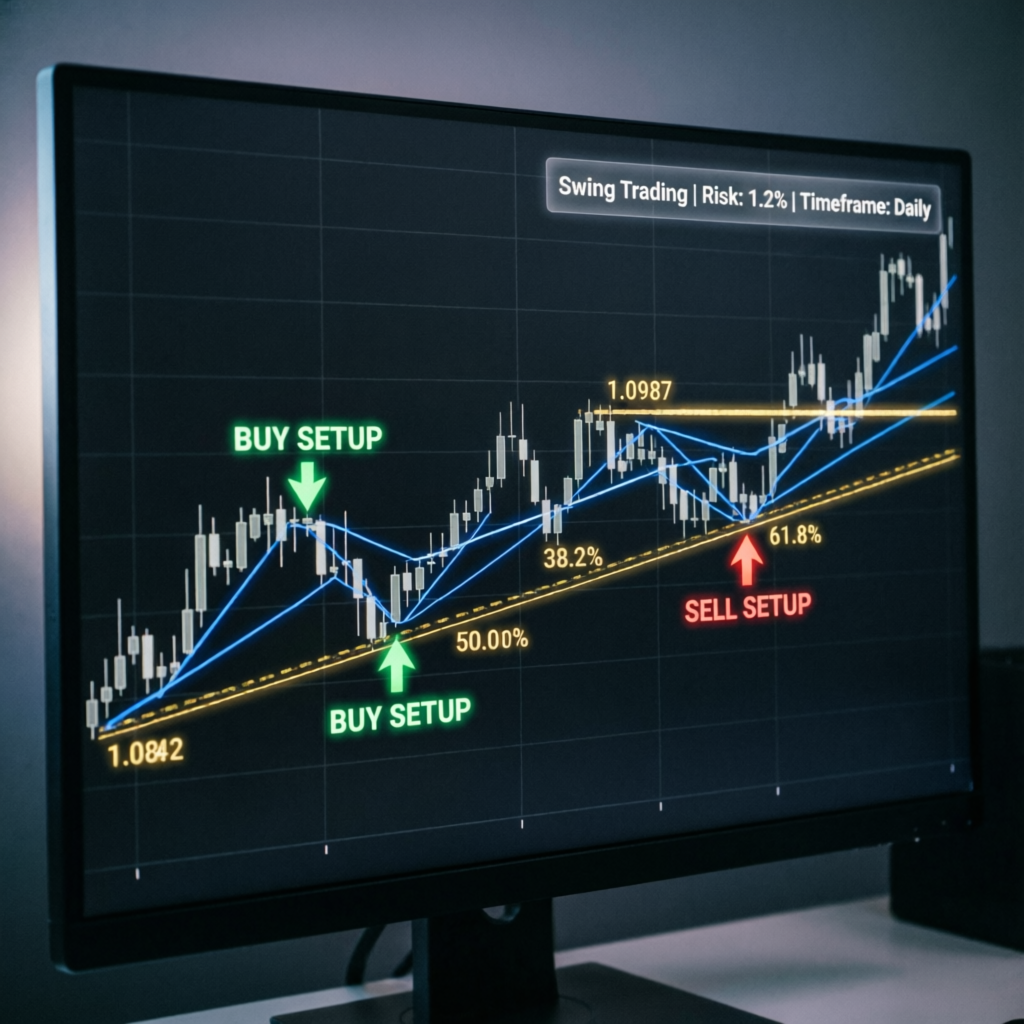
Swing Trading Chart showing buy and sell setups with Fibonacci retracement levels
Figure 1: Swing Trading setups on a daily chart showing Fibonacci retracement levels and key support/resistance zones used by PFM Capitals traders.

Market Structure Analysis

Market structure is the backbone of swing trading. Before entering any trade, a swing trader must understand the broader context in which the market is moving. This involves identifying the dominant trend, recognizing key support and resistance levels, and understanding where price is likely to move next.

At PFM Capitals, our traders use a multi-timeframe analysis approach. They start with the weekly chart to identify the primary trend, move to the daily chart for intermediate structure, and then use the H4 chart for precise entry timing. This top-down approach ensures that every trade aligns with the broader market direction, significantly increasing the probability of success — a critical factor when working with funded account management services.

Price Action Trading

Price action is the purest form of market analysis, relying solely on the movement of price itself rather than lagging indicators. Swing traders who master price action can read the market like a book, identifying key patterns and setups that signal high-probability trading opportunities.

Key price action patterns used in swing trading include:

  • Pin Bars: Rejection candles that signal potential reversals at key levels
  • Inside Bars: Consolidation patterns that often precede significant breakouts
  • Engulfing Patterns: Strong reversal signals when a candle completely engulfs the previous one
  • Double Tops and Bottoms: Classic reversal patterns at major support and resistance zones
  • Head and Shoulders: Reliable reversal patterns that signal trend changes
  • Flags and Pennants: Continuation patterns that signal the resumption of an existing trend

Technical Indicators That Complement Swing Trading

While price action is the foundation, certain technical indicators can enhance swing trading analysis. The most effective indicators for swing trading include:

  • Moving Averages (50 EMA and 200 EMA): Help identify trend direction and dynamic support/resistance levels
  • RSI (Relative Strength Index): Identifies overbought and oversold conditions for potential reversals
  • MACD (Moving Average Convergence Divergence): Confirms trend momentum and potential divergences
  • Fibonacci Retracement: Identifies potential pullback levels within an existing trend
  • Volume Analysis: Confirms the strength of breakouts and reversals
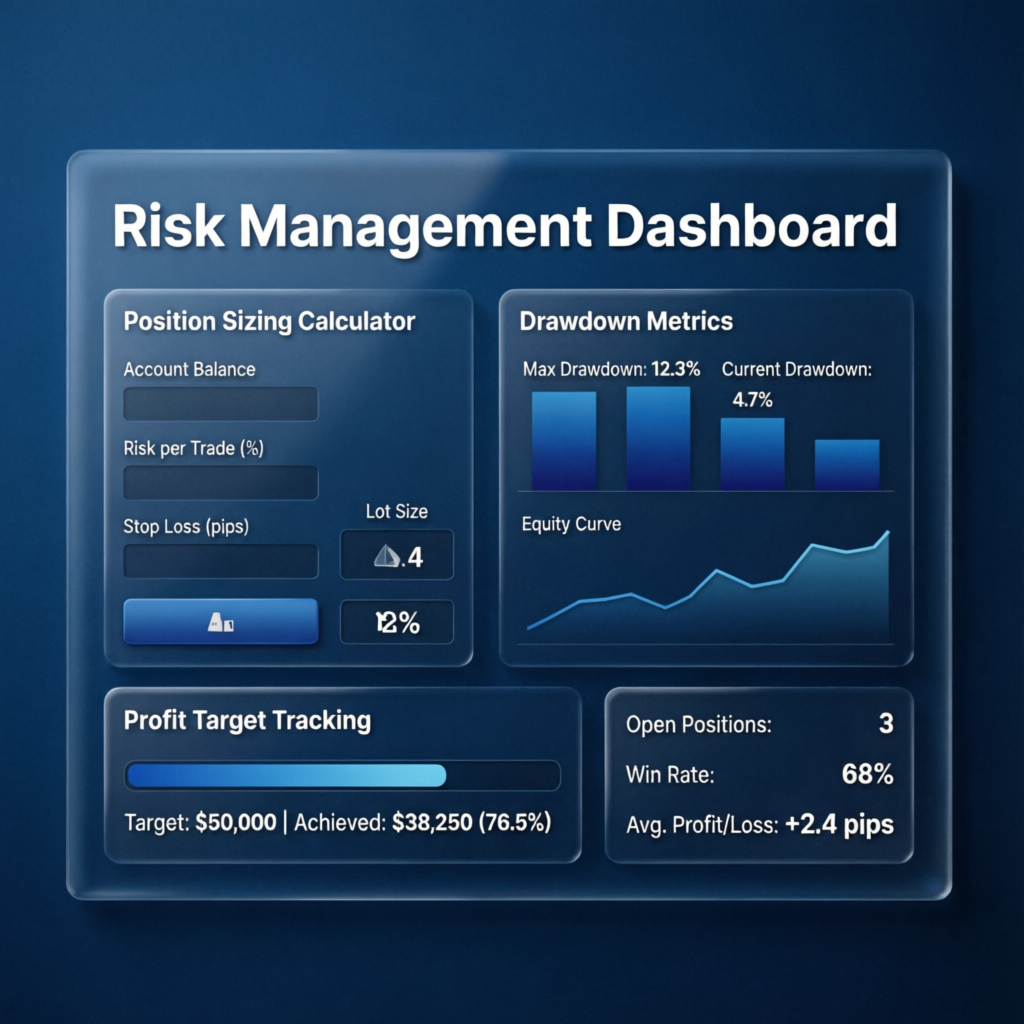
Risk Management Dashboard showing position sizing and drawdown metrics
Figure 2: Risk Management Dashboard — Essential for maintaining discipline in prop firm evaluations.

Risk Management: The Cornerstone of Swing Trading

No swing trading strategy is complete without robust risk management. In the context of prop firm evaluations, risk management is not just important — it is absolutely critical. A single poorly managed trade can violate drawdown rules and result in account termination.

The golden rule of swing trading risk management is to never risk more than 1-2% of your account balance on a single trade. For a $100,000 funded account, this means risking no more than $1,000 to $2,000 per trade. This disciplined approach ensures that even a string of losses won’t come close to the maximum drawdown limits set by prop firms.

Professional Tip: At PFM Capitals, we recommend a 1% risk per trade for all prop firm evaluations. This conservative approach provides a buffer against unexpected market moves and ensures you have enough capital to recover from losing streaks. Our forex fund management team uses this exact principle across all managed accounts.

Position Sizing and Lot Calculation

Proper position sizing is the mathematical foundation of risk management. Before entering any swing trade, you must calculate the appropriate lot size based on your stop loss distance and risk percentage. The formula is straightforward:

Position Size = (Account Balance × Risk Percentage) ÷ Stop Loss in Pips × Pip Value

For example, if you have a $50,000 account, risk 1% ($500), and your stop loss is 50 pips on EUR/USD (where 1 pip = $10 for a standard lot), your position size would be 1 standard lot. This calculation ensures that your risk remains consistent across all trades, regardless of the instrument or stop loss distance.

Trade Entry and Exit Strategies

Successful swing trading requires well-defined entry and exit criteria. Entries should only be taken when multiple confluence factors align: the trade direction matches the dominant trend, price is at a key support or resistance level, a recognizable candlestick pattern has formed, and risk-reward ratio is at least 1:2.

Exits should be managed using a combination of trailing stops and fixed take-profit levels. A common approach is to close 50% of the position at the first target (1:2 risk-reward) and let the remaining 50% run with a trailing stop to capture extended moves. This approach locks in profits while allowing for additional gains.

Professional trader workspace with laptop showing charts and trading journal
Figure 3: A professional trader’s workspace — discipline and preparation are key to swing trading success.

Market Selection for Swing Trading

Not all markets are created equal for swing trading. The best markets for swing trading are those with clear trends, sufficient liquidity, and manageable volatility. For forex traders, the major pairs — EUR/USD, GBP/USD, USD/JPY, and AUD/USD — are ideal because they offer tight spreads, deep liquidity, and well-defined trends.

Commodity indices like gold (XAU/USD) and oil (WTI/CL) also provide excellent swing trading opportunities due to their trending nature. Stock indices such as the S&P 500, NASDAQ, and DAX are popular choices for swing traders who prefer index CFDs. At PFM Capitals, our prop firms passing service focuses primarily on major forex pairs and gold, as these instruments provide the most consistent swing trading setups.

Trading Sessions and Timing

While swing trading doesn’t require constant screen monitoring, timing your entries around key trading sessions can significantly improve your results. The London session (3 AM – 12 PM EST) and the New York session (8 AM – 5 PM EST) offer the highest liquidity and volatility, making them ideal for swing trade entries. The overlap between London and New York (8 AM – 12 PM EST) is particularly powerful, often producing the strongest daily candlestick patterns.

Swing traders should avoid entering new positions during low-liquidity periods such as the Asian session (unless trading JPY pairs) or during major holiday periods when market behavior can be unpredictable and unreliable.

Best Swing Trading Strategies for Prop Firm Evaluations

Having a well-defined trading strategy is the difference between consistent profitability and random gambling. In the world of prop firm services, traders need strategies that are not only profitable but also consistent, repeatable, and aligned with the specific rules of each prop firm. Below are the most effective swing trading strategies used by professional traders at PFM Capitals.

Strategy 1: Trend Following with Pullback Entries

This is the most reliable swing trading strategy for prop firm evaluations. The concept is simple: identify the dominant trend on the daily chart, wait for price to pull back to a key support (in an uptrend) or resistance (in a downtrend) level, and enter in the direction of the trend when a reversal candlestick pattern confirms the pullback is complete.

Key Rules:

  • Only trade in the direction of the daily chart trend
  • Wait for pullback to the 50% or 61.8% Fibonacci retracement level
  • Look for price action confirmation (pin bar, engulfing pattern)
  • Set stop loss below/above the swing low/high
  • Target a minimum 1:2 risk-reward ratio

Strategy 2: Support and Resistance Bounce

Markets tend to respect historical support and resistance levels. This strategy involves identifying major horizontal levels on the daily chart where price has reversed multiple times in the past, and entering trades when price approaches these levels showing signs of rejection.

Key Rules:

  • Identify at least 3 touches of the same level for confirmation
  • Wait for price action rejection at the level
  • Enter on the close of the confirmation candle
  • Use a tight stop loss just beyond the level
  • Target the next major support/resistance level

Strategy 3: Breakout and Retest

When price breaks through a significant support or resistance level, it often continues in the breakout direction. However, the most reliable entries occur when price breaks, pulls back to retest the broken level (which now acts as support in an uptrend or resistance in a downtrend), and then continues in the breakout direction.

Key Rules:

  • Identify a significant horizontal level with multiple touches
  • Wait for a strong breakout candle to close beyond the level
  • Wait for price to pull back and retest the broken level
  • Enter on a reversal candlestick at the retest
  • Stop loss goes below/above the retest candle
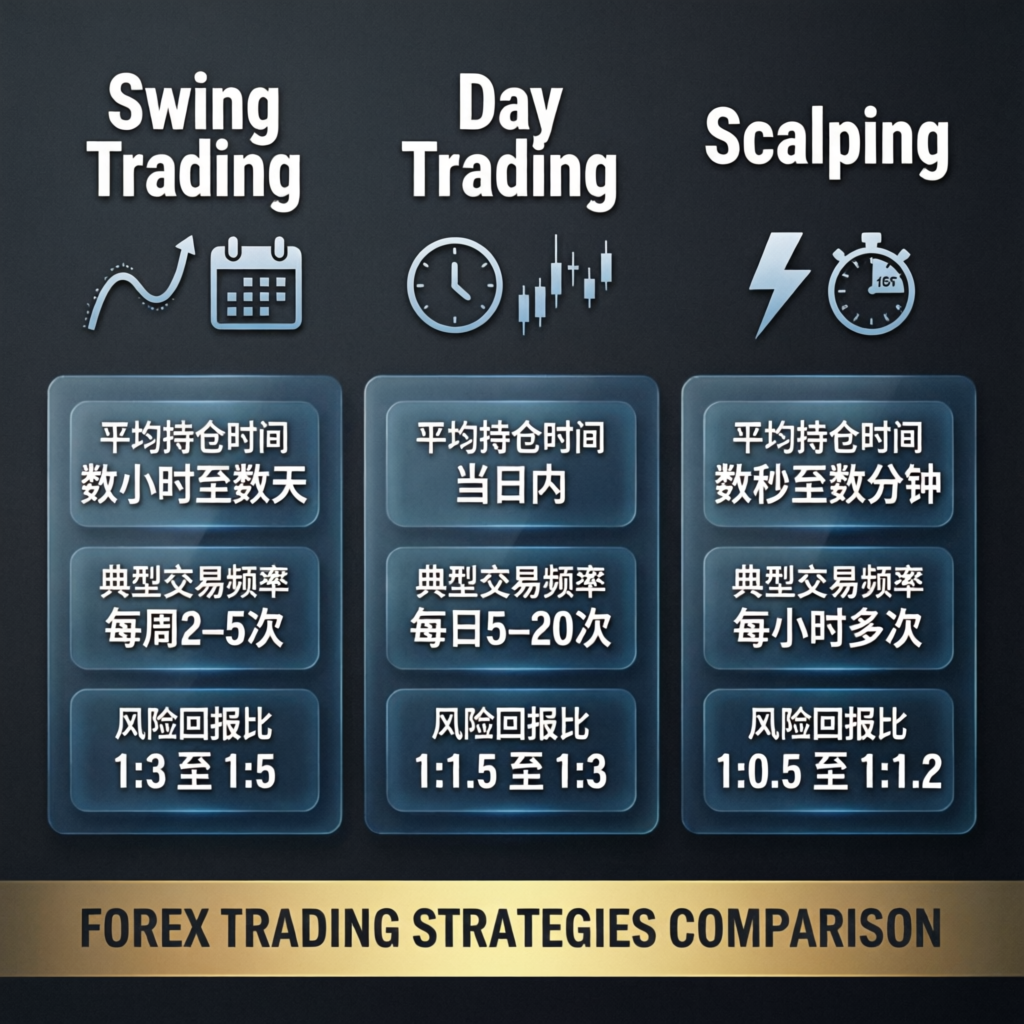
Comparison of Swing Trading vs Day Trading vs Scalping strategies
Figure 4: Comparison of trading strategies — Swing trading offers the best risk-reward for prop firm evaluations.

Strategy 4: Moving Average Crossover with Trend Confirmation

While many traders dismiss moving averages as lagging indicators, they can be powerful tools when used correctly in swing trading. The 50-period and 200-period exponential moving averages (EMAs) on the daily chart provide clear trend direction signals and dynamic support/resistance levels.

Key Rules:

  • Price above both 50 EMA and 200 EMA = Uptrend (look for buys)
  • Price below both 50 EMA and 200 EMA = Downtrend (look for sells)
  • Enter when price pulls back to the 50 EMA and shows rejection
  • Avoid trading when the 50 EMA and 200 EMA are flat and intertwined (ranging market)
  • Combine with horizontal support/resistance for stronger signals

Risk Management Rules for Prop Firm Trading

Regardless of which strategy you use, the following risk management rules are non-negotiable for prop firm success:

  • Maximum risk per trade: 1% of account balance
  • Maximum daily loss: 2% of account balance (stay well below the prop firm’s daily drawdown limit)
  • Maximum consecutive losses: Stop trading for the day after 2 consecutive losses
  • Minimum risk-reward ratio: 1:2 on every trade
  • Maximum open positions: 3 trades at any given time
  • Correlation management: Never hold correlated positions (e.g., EUR/USD and GBP/USD in the same direction)

Trading Psychology Tips

Even the best strategy will fail without proper psychological discipline. Here are the key psychological principles that separate successful swing traders from the rest:

  • Patience is your greatest edge: Wait for A+ setups only. Most losses come from forcing trades that don’t meet your criteria.
  • Accept losses as part of the game: Even with a 60% win rate, you will lose 40% of your trades. This is normal and expected.
  • Never revenge trade: After a loss, take a break. Emotional trading leads to catastrophic results.
  • Keep a trading journal: Document every trade with screenshots, reasoning, and emotional state. Review weekly.
  • Focus on the process, not the outcome: A well-executed losing trade is better than a poorly executed winning trade.
  • Set daily limits: Once you’ve hit your daily profit target, stop trading. Greed is the enemy of consistency.

Common Mistakes to Avoid

⚠️ Warning: The following mistakes are the primary reasons traders fail prop firm evaluations. Avoiding these will dramatically increase your success rate.
  • Overtrading: Taking too many trades, especially low-quality setups, increases exposure to risk and transaction costs.
  • Ignoring the daily drawdown limit: Many traders calculate their risk based on the total drawdown limit rather than the daily limit, leading to account breaches.
  • Moving stop losses: Never move your stop loss further away from your entry. This is the fastest way to blow an account.
  • Trading during high-impact news: NFP, CPI, and central bank announcements can cause extreme volatility that violates drawdown limits instantly.
  • Lack of a trading plan: Trading without a predefined plan leads to emotional decision-making and inconsistent results.
  • Using excessive leverage: High leverage magnifies both gains and losses. In prop firm trading, survival is more important than quick profits.
Professional trader analyzing forex charts on multiple monitors
Figure 5: Professional analysis and preparation — the foundation of consistent swing trading results.

Prop Firm Rules & Requirements You Must Know

Every prop firm has specific rules that traders must follow during the evaluation phase and while managing a funded account. Understanding these rules is critical because violating even one can result in immediate account termination. At PFM Capitals, our prop firms passing service is designed to navigate these rules with precision.

Typical Prop Firm Evaluation Rules

Rule Phase 1 Phase 2 Funded Account
Profit Target 8% – 10% 5% N/A
Daily Drawdown 5% 5% 5%
Maximum Drawdown 10% 10% 10%
Minimum Trading Days 5 days 5 days N/A
Consistency Rule Yes Yes Yes
News Trading Allowed Varies Varies Varies
Time Limit 30 days (some unlimited) 60 days None
Profit Split N/A N/A 70% – 90%

Daily Drawdown: The Silent Account Killer

The daily drawdown rule is the most critical rule in any prop firm evaluation. Most firms set this at 5% of the initial account balance, calculated from the highest equity point of the day. This means if your account starts at $100,000 and grows to $102,000 during the day, your daily drawdown limit becomes $102,000 × 5% = $5,100. Your equity must not fall below $96,900 at any point during that trading day.

For swing traders, this means you must carefully calculate your position sizes to ensure that even if price moves against you, you won’t breach the daily drawdown limit. A general rule is to never have more than 2% of your account at risk from open positions at any given time.

Maximum Drawdown: Your Safety Net

The maximum drawdown rule (typically 10% of the initial account balance) is calculated from the starting balance and acts as a hard stop. If your account equity falls below $90,000 on a $100,000 account, the account is terminated. This rule emphasizes the importance of consistent risk management and avoiding large drawdowns during the evaluation phase.

Consistency Rules

Many prop firms implement consistency rules to ensure that traders aren’t relying on a single lucky trade to pass the evaluation. A typical consistency rule requires that no single trade contributes more than 30-50% of the total profit needed to pass. This encourages traders to take multiple high-quality trades rather than gambling on one big position.

News Trading Rules

Some prop firms restrict trading during high-impact news events such as Non-Farm Payrolls (NFP), Consumer Price Index (CPI) releases, and central bank interest rate decisions. These events can cause extreme price spikes that may trigger stop losses or breach drawdown limits. If your prop firm allows news trading, be extra cautious and reduce position sizes during these events. At PFM Capitals, our traders typically avoid entering new positions 30 minutes before and after major news releases.

✅ Pro Tip: Use an economic calendar to track high-impact news events. Our funded account management service includes a comprehensive news filter that automatically avoids trading during volatile periods.

How to Pass a Prop Firm Evaluation: Step-by-Step

Following a structured process is essential for prop firm success. Here is the exact step-by-step process used by PFM Capitals traders to consistently pass prop firm evaluations and manage funded accounts profitably.

1

Select the Right Prop Firm

Research and choose a prop firm that aligns with your trading style. Consider factors such as profit targets, drawdown limits, trading rules, profit split, and reputation. Popular options include FTMO, The5%ers, True Forex Funds, and MyFundedFX. At PFM Capitals, we can guide you to the best prop firm for your specific needs through our prop firm services.

2

Understand the Rules Thoroughly

Read and understand every rule of the evaluation phase. Know the profit target, daily drawdown, maximum drawdown, minimum trading days, consistency requirements, and any restrictions on trading styles or news trading. Write these rules down and keep them visible during your trading sessions.

3

Develop Your Trading Plan

Create a detailed trading plan that includes your strategy, entry/exit criteria, risk management rules, and daily routine. Your plan should specify which instruments you’ll trade, what timeframes you’ll analyze, how many trades you’ll take per day, and what your maximum daily loss will be.

4

Practice on a Demo Account

Before risking real money on an evaluation, practice your strategy on a demo account that mirrors the prop firm’s conditions. Trade for at least 2-4 weeks on demo to confirm that your strategy is profitable and that you can follow your trading plan consistently.

5

Start the Evaluation with Conservative Risk

Begin the evaluation phase by risking only 0.5% per trade for the first few trades. This allows you to build a buffer and gain confidence without putting your account at significant risk. Once you have a comfortable buffer above your starting balance, you can increase to the standard 1% risk per trade.

6

Execute Trades According to Your Plan

Stick to your trading plan religiously. Only take trades that meet all your entry criteria. If no setup is available, don’t trade. Patience is your greatest weapon. Remember that there is no time limit on many modern prop firms, so rushing is unnecessary.

7

Manage Risk Religiously

Never risk more than 1% per trade. Track your daily drawdown carefully. If you hit 2% daily loss, stop trading for the day. Never move your stop loss. Never add to losing positions. These rules are non-negotiable and are the foundation of long-term trading success.

8

Complete Phase 2 and Get Funded

Once you pass Phase 1, approach Phase 2 with the same discipline. The profit target is typically lower (5%), but the rules remain the same. After passing Phase 2, you’ll receive your funded account and can begin earning real profits. At this point, consider using PFM Capitals’ funded account management service to maximize your earnings.

Funded Account Certificate with gold seal and approval stamp
Figure 6: Funded Account Certificate — Your reward for passing the prop firm evaluation successfully.

Advantages & Disadvantages of Swing Trading

Every trading strategy has its strengths and weaknesses. Understanding both sides of swing trading will help you make an informed decision about whether it’s the right approach for your trading goals and personality.

Advantages

  • Less screen time required compared to day trading or scalping
  • Higher risk-to-reward ratios (typically 1:2 to 1:5)
  • Reduced impact of market noise and micro-fluctuations
  • More time for thorough analysis before entering trades
  • Lower transaction costs due to fewer trades
  • Easier to manage alongside a full-time job
  • Less psychological stress and emotional trading
  • Ideal for prop firm evaluations with time flexibility
  • Works well with multiple timeframes for confluence
  • Compatible with automated alerts and notifications

Disadvantages

  • Overnight and weekend gap risk
  • Requires patience and discipline to wait for setups
  • Fewer trading opportunities compared to scalping
  • Swap fees can eat into profits on long-held positions
  • Requires understanding of multiple timeframes
  • Can be challenging during ranging/choppy markets
  • May require larger stop losses, affecting position sizing
  • Emotional difficulty holding through drawdowns
  • Requires broader market knowledge and analysis
  • Not suitable for traders who crave constant action

Swing Trading vs. Other Strategies: Quick Comparison

Factor Swing Trading Day Trading Scalping
Timeframe Daily / H4 M15 – H1 M1 – M5
Holding Period Days to weeks Minutes to hours Seconds to minutes
Trades per Day 0–2 3–10 20–100+
Risk per Trade 1–2% 0.5–1% 0.1–0.5%
Risk-Reward 1:2 to 1:5 1:1 to 1:3 1:0.5 to 1:1.5
Screen Time 30 min – 2 hrs 4–8 hrs Full session
Stress Level Low–Medium High Very High
Best for Prop Firms ⭐⭐⭐⭐⭐ ⭐⭐⭐ ⭐⭐

Why Choose PFM Capitals for Your Trading Journey

PFM Capitals is a leading prop firms passing service and funded account management service provider, trusted by thousands of traders worldwide.

94% Pass Rate

Our experienced traders maintain an industry-leading 94% success rate in passing prop firm evaluations. We don’t just trade — we deliver results consistently across all major prop firms.

👨‍💼

Professional Traders

Our team consists of seasoned traders with 5+ years of experience in forex markets. Each trader is vetted, tested, and proven before being assigned to client accounts.

📊

Verified Proof

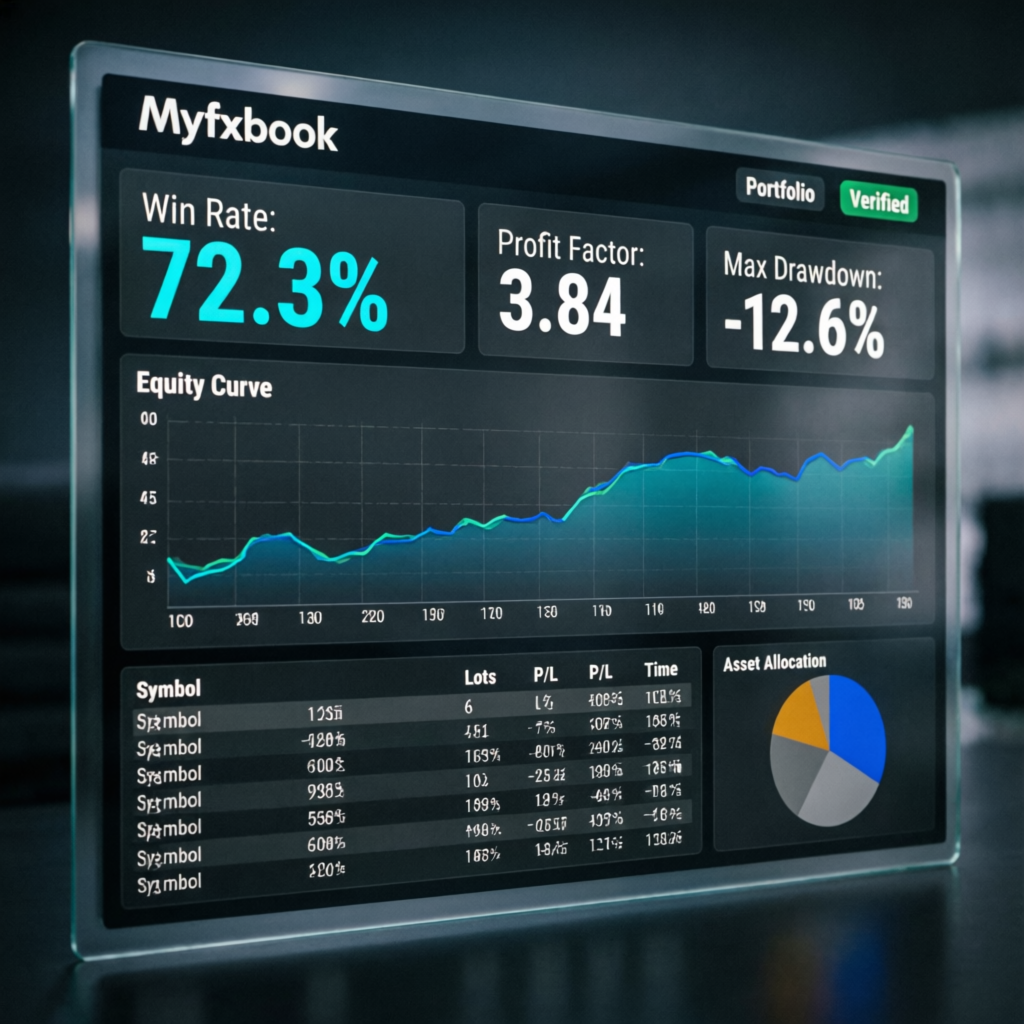
All our trading results are verified through Myfxbook and other third-party verification services. We provide transparent, auditable performance records for every account.

Advanced Risk Management

Our proprietary risk management system ensures that every trade is calculated to stay well within prop firm drawdown limits. We prioritize capital preservation above all else.

💬

24/7 Fast Support

Our dedicated support team is available around the clock via Telegram and WhatsApp. Get instant answers to your questions and real-time updates on your account status.

Trusted Global Service

With clients in over 50 countries, PFM Capitals has built a reputation as one of the most reliable prop firm services in the industry. Your trust is our greatest asset.

Verified Trading Results

Transparent, verified performance data from our forex account management team.

Myfxbook verified trading performance dashboard

FTMO $100K Challenge — Passed

Completed in 18 trading days using swing trading strategy.

+12.4%
Profit
72.3%
Win Rate
3.84
Profit Factor
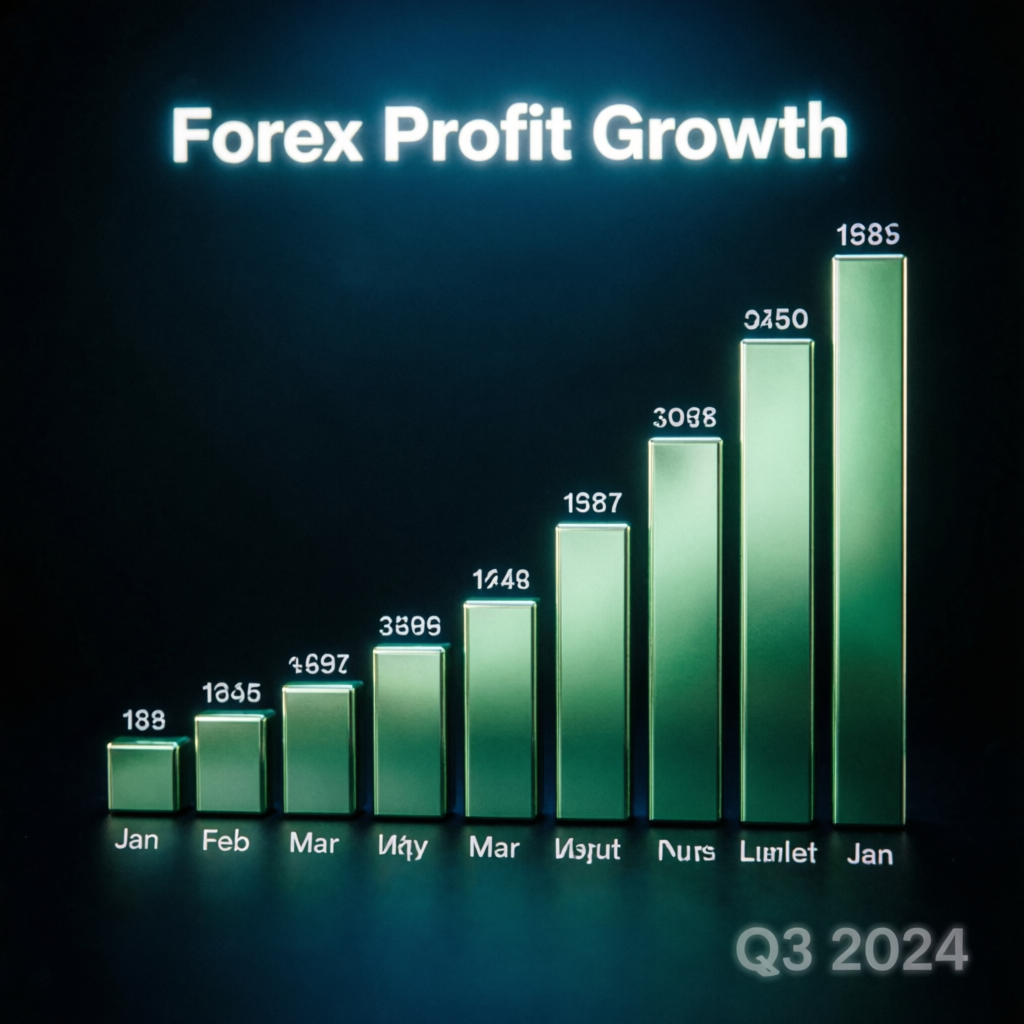
Forex profit growth chart showing steady growth

Funded Account Growth — 6 Months

Consistent monthly profits from a managed funded account.

+$47,850
Total Profit
8.2%
Avg Monthly
90%
Profit Split
Funded Account Certificate

The5%ers $50K — Boost Account

Passed Phase 1 and Phase 2 with conservative risk management.

+8.1%
Phase 1
+5.3%
Phase 2
14 days
Duration

What Our Clients Say

Real reviews from real traders who used our prop firms passing services and funded account management services.

“PFM Capitals’ prop firms passing service is absolutely incredible. They passed my FTMO $200K challenge in just 12 days. I couldn’t believe how professional and consistent their trading was. Highly recommend their funded account management service too!”

JM
James Mitchell
FTMO Trader — United States

“I was struggling to pass my prop firm evaluation for months. After trying PFM Capitals’ prop firms passing service, they passed it on the first attempt. Their forex account management team is top-notch. Best decision I ever made.”

SK
Sarah Khan
The5%ers Trader — United Kingdom

“The funded account management service from PFM Capitals has been a game-changer for me. They manage my $100K funded account with incredible consistency. I’ve been receiving monthly payouts for 6 months straight. Truly professional.”

RL
Robert Lee
Funded Trader — Canada

“I was skeptical at first, but PFM Capitals delivered beyond my expectations. Their prop firm services helped me get funded with a $50K account, and now I’m earning consistent profits. The swing trading strategy they use is brilliant.”

AP
Ahmed Patel
Funded Trader — India

“PFM Capitals passed my MyFundedFX evaluation in record time. Their team is responsive, professional, and results-oriented. I’ve now moved on to their funded account management service and couldn’t be happier with the results.”

MC
Maria Chen
MyFundedFX Trader — Australia

“The best prop firms passing service I’ve ever used. PFM Capitals not only passed my evaluation but also provided detailed reports and updates throughout the process. Their risk management is exceptional. 10/10 would recommend.”

DW
David Wilson
FTMO Trader — Germany

“I’ve tried multiple prop firm services before, but PFM Capitals is in a league of its own. Their forex fund management approach is disciplined, transparent, and profitable. They’ve helped me build a sustainable income from trading.”

LT
Lisa Thompson
Funded Trader — Netherlands

“Pass My Prop Firms with PFM Capitals was the easiest decision I’ve made. They handled everything professionally and kept me updated throughout. Now I have a funded account that’s generating consistent profits every month.”

KH
Kevin Harris
True Forex Funds Trader — South Africa

“Outstanding service from PFM Capitals. Their swing trading approach is perfect for prop firm challenges. They passed my $100K FTMO challenge with a 12% profit in just 3 weeks. Their funded account management service is equally impressive.”

NR
Natalie Rodriguez
FTMO Trader — Spain

“PFM Capitals is the real deal. I was failing prop firm evaluations consistently until I found their prop firms passing service. They passed my challenge and now manage my funded account. I’m earning more in a month than I used to make in a year.”

OB
Omar Bakr
Funded Trader — UAE

“The team at PFM Capitals is incredibly professional. Their forex account management service has transformed my trading career. They handle all the trading while I focus on growing my business. Couldn’t ask for better results.”

SJ
Sophie Jensen
Funded Trader — Denmark

“I recommend PFM Capitals to every trader looking for a reliable prop firms passing service. They’re transparent, professional, and deliver results. My FTMO account was passed in under 2 weeks with minimal risk. Absolutely phenomenal.”

TP
Thomas Park
FTMO Trader — South Korea

“PFM Capitals’ funded account management service is world-class. They’ve been managing my $200K funded account for 8 months and have delivered consistent returns every single month. The profit splits have been amazing.”

EG
Elena Garcia
Funded Trader — Mexico

“After failing 3 prop firm evaluations on my own, I turned to PFM Capitals. They passed my challenge on the first try using their proven swing trading strategy. Now I’m a funded trader earning consistent income. Thank you, PFM Capitals!”

MR
Michael Roberts
The5%ers Trader — New Zealand

“PFM Capitals offers the best prop firm services in the market. Their team is knowledgeable, responsive, and results-driven. They passed my $50K challenge and now manage the funded account. I’m extremely satisfied with everything.”

FA
Fatima Al-Rashid
Funded Trader — Saudi Arabia

“The forex fund management team at PFM Capitals is exceptional. They’ve helped me scale from a $50K to a $400K funded account in just 6 months. Their disciplined approach to swing trading and risk management is unmatched in the industry.”

CW
Chris Williams
Multi-Funded Trader — Ireland

“I can’t say enough good things about PFM Capitals. Their prop firms passing service saved me hundreds of dollars in failed evaluation fees. They passed my challenge quickly and professionally. Their funded account management is equally outstanding.”

YN
Yuki Nakamura
FTMO Trader — Japan

“PFM Capitals is my go-to for all prop firm needs. Whether it’s passing a new challenge or managing my existing funded accounts, they deliver consistently. Their swing trading strategy is perfectly suited for prop firm environments. Highly recommended!”

PD
Pierre Dubois
Funded Trader — France

“Working with PFM Capitals has been a life-changing experience. Their forex account management service has given me the financial freedom I always dreamed of. Professional, reliable, and incredibly profitable. 5 stars across the board.”

IB
Isabella Brown
Funded Trader — Brazil

“PFM Capitals’ pass my prop firms service is the best investment I’ve made in my trading career. They passed my $100K challenge in 15 days and now manage the account with consistent monthly profits. If you want results, go with PFM Capitals.”

AS
Alexander Smirnov
FTMO Trader — Russia

Frequently Asked Questions

Everything you need to know about swing trading, prop firm evaluations, and our prop firms passing service.

What is swing trading and how does it work in prop firm challenges? +
Swing trading is a trading strategy that holds positions for several days to weeks to capture medium-term price movements. In prop firm challenges, swing trading allows traders to take advantage of larger market moves while managing risk effectively, making it ideal for meeting profit targets without exceeding drawdown limits. At PFM Capitals, swing trading is our primary strategy for passing prop firm evaluations because it provides the best balance of profitability and risk management.
What is the best strategy to pass a prop firm evaluation? +
The best strategy to pass a prop firm evaluation is swing trading with strict risk management. Use 1-2% risk per trade, focus on high-probability setups, maintain consistency, and avoid overtrading. Professional prop firms passing services like PFM Capitals can also help traders pass their evaluations with experienced traders and proven strategies.
How much capital do I need to start swing trading with a funded account? +
You don’t need significant personal capital when using a funded account management service. Prop firms provide accounts ranging from $5,000 to $400,000. You only pay a small evaluation fee (typically $50-$500) to access the capital, making it accessible for traders of all levels. The evaluation fee is the only investment required to start trading with substantial capital.
Is forex account management better than managing your own account? +
Professional forex account management can be significantly more effective than self-management. Expert fund managers bring years of experience, proven strategies, disciplined risk management, and emotional control that many individual traders lack. At PFM Capitals, our managed accounts consistently outperform self-managed accounts in terms of both profitability and consistency.
What is the average profit split in prop firm funded accounts? +
Most prop firms offer profit splits ranging from 70% to 90% for traders. At PFM Capitals, traders can earn up to 90% of the profits generated on their funded accounts, making it one of the most competitive structures in the industry. The profit split typically increases as traders demonstrate consistent performance over time.
Can I use swing trading for prop firm challenges with daily drawdown rules? +
Yes, swing trading is excellent for prop firm challenges with daily drawdown rules. Since swing trades typically have wider stop losses, you can adjust position sizing to ensure you never exceed the daily drawdown limit. The key is proper position sizing and avoiding high-volatility news events. Our prop firm services team specializes in navigating these rules effectively.
How long does it typically take to pass a prop firm evaluation? +
With a disciplined swing trading approach, most traders pass prop firm evaluations within 2-4 weeks. Using a professional prop firms passing service can significantly reduce this time, as experienced traders execute the challenge with optimized strategies. At PFM Capitals, our average passing time is 14 days for Phase 1 and 10 days for Phase 2.
What are the most common reasons traders fail prop firm challenges? +
The most common reasons include: exceeding daily or maximum drawdown limits, overleveraging trades, lack of a proven strategy, emotional trading, revenge trading after losses, and failing to manage risk properly. Professional funded account management services help eliminate these issues by applying disciplined, rule-based trading approaches.
What is the difference between swing trading and day trading? +
Swing trading involves holding positions for days to weeks to capture larger price movements, while day trading requires opening and closing all positions within a single trading day. Swing trading generally requires less screen time, is less stressful, and offers better risk-to-reward ratios — making it ideal for prop firm traders who need to balance evaluation requirements with consistent profitability.
Does PFM Capitals guarantee passing prop firm challenges? +
PFM Capitals maintains a 94% success rate in passing prop firm challenges through experienced traders, proven strategies, and strict risk management. While no service can guarantee a 100% pass rate due to market uncertainty, our track record and verified results demonstrate exceptional performance. We also offer a free retry if the first attempt is unsuccessful, giving you complete peace of mind.
Which prop firms are best for swing trading? +
The best prop firms for swing trading are those that offer flexible time limits, reasonable drawdown rules, and allow holding positions overnight and over weekends. Top recommendations include FTMO, The5%ers, MyFundedFX, and True Forex Funds. At PFM Capitals, we have extensive experience with all major prop firms and can recommend the best option based on your specific goals and trading style.
How does PFM Capitals’ funded account management service work? +
Our funded account management service is straightforward: you provide us with access to your funded account, our professional traders execute swing trading strategies with strict risk management, and you receive your profit share (typically 70-90%) on a monthly basis. We provide regular reports and real-time access so you can monitor performance at any time. There are no hidden fees — you only pay when profits are generated.
What is forex fund management and how is it different from account management? +
Forex fund management typically refers to managing larger pools of capital, often from multiple investors, using institutional-grade strategies and risk management. Forex account management, on the other hand, focuses on managing individual trading accounts. At PFM Capitals, we offer both services — from individual prop firm account management to larger-scale forex fund management solutions for serious investors.
Can beginners use PFM Capitals’ prop firms passing service? +
Absolutely! Our prop firms passing service is designed for traders of all experience levels. Whether you’re a complete beginner who wants to skip the learning curve or an experienced trader looking for professional assistance, PFM Capitals can help. We handle the entire evaluation process, and you can focus on learning and growing as a trader while we work on passing your challenge.
How do I get started with PFM Capitals? +
Getting started is simple: 1) Visit PFM Capitals and choose the service you need (prop firm passing, funded account management, or forex account management). 2) Contact our team via Telegram or WhatsApp for a free consultation. 3) Provide your account details and preferences. 4) Our team takes over and delivers results. The entire process is transparent, and you’ll receive regular updates on your account’s progress.

Ready to Pass Your Prop Firm Challenge?

Join 2,800+ traders who trust PFM Capitals for professional prop firms passing services and funded account management.

94% Pass Rate
Secure & Confidential
Fast Turnaround
📊 Verified Results
🔄 Free Retry Guarantee
Chat on Telegram Chat on WhatsApp
Scroll to Top